Coefficient Giving is scaling rapidly right now, both in terms of dollars moved and people hired. To give prospective hires a window into the parts of Coefficient that can be hard to see from the outside, we asked staff members from across the org to tell us about what surprised them most when they arrived. If what follows sounds like a place you’d want to work, we hope you’ll take a look at our open roles.
Dylan Matthews, Associate Program Officer, Abundance & Growth
Joined December 2025
My first day at CG, one of our wonderful People Operations team members, Annie Brandt, gave me a short presentation on the organization, its structure, and its values, including a slide that laid out how many staffers worked in each division. I was struck that a very large share of the team (over a third at the time) worked in operations. It didn’t take long for me to start seeing how important that is to making this a great place to work.
Later that same day, I got set up with a dedicated Slack channel with my name on it. Kearney Capuano, another team member helping me onboard, told me that it was connected to people who could help me with whatever problems or hiccups that might arise on the job: payroll specialists, benefits managers, IT support, office managers, you name it. Just type what your issue is in your dedicated channel, Kearney said, and someone will promptly jump in to help — no need to guess which department owns the problem or hunt down the right person’s email. This felt a little too good to be true, but it was true. If I had an issue with my Claude account, Chris Webster would promptly respond. If I had a 401(k) question, Nick Ravazzolo was immediately on it.
It soon became clear that this is a workplace that has been very carefully designed to remove as much friction as possible from my core job: identifying the best grants to make. And it’s meant to reduce friction for everyone, including the operations people who helped me; when Chris Webster wasn’t assisting me with Claude, he was teaching folks on the Grants and Salesforce teams how to use AI to make their lives easier.
I’m lucky in that I’ve never had a job I truly hated, but I’ve definitely worked places where I had to fight what felt like a tough, entrenched bureaucracy to get my work done. I can honestly say I’ve never had to do that at CG. I once referred a friend for a CG job, and the recruiter asked if I had any hesitations; the one thing I came up with was that my friend was really skilled at bureaucratic infighting, and at CG that is a genuinely useless skill. We hired him regardless because of his many other impressive skills — but still, what a wonderful thing, to have landed at an organization where your corporate jockeying skills don’t matter at all.
Aveek Bhattacharya, Strategy Fellow, Global Health & Wellbeing Cause Prioritization
Joined September 2025
For those of us with remote-friendly roles, being able to do our jobs from anywhere in the world is one of the most attractive things about working at Coefficient Giving. Another great feature of the organization is the amount of autonomy and ownership we have over the projects we take on. In my experience, though, those things combined can create a tendency towards atomization, with each individual working independently on their own. Having worked remote jobs before, I came in half-expecting to give up some closeness with my colleagues in return for the flexibility.
Ten months in, I’m glad to have been proven wrong. CG works hard to make sure that our staff stays connected. We have a vibrant Slack workspace, where people share everything from pictures of their pets to music recommendations — which, as a millennial raised on instant messaging, is ideal for me. We are regularly paired with people from across the organization for video calls intended to emulate the virtual watercooler. And a few times a year, we are invited to our main office in San Francisco for a week of co-working, which is a great opportunity to spend time with people on other teams. I personally make a conscious effort to visit our co-working hub in London every month or so even though it’s a couple of hours away from my home in York, and the regular reminder of how welcoming CG staff are and how interestingly diverse our work is makes it worth the trip.
Within the cause prioritization team, we’ve made a deliberate effort to be more sociable and get to know one another over recent months. In addition to our regular research-oriented meetings, we get together regularly for online games like Codenames and GeoGuessr. Seven of us recently went on a team trip to Kenya: not only did we get the chance to see grantees in action delivering important health services, but we also had time to bond through experiences like spotting animals in Nairobi National Park together.
Darius Meissner, Chief of Staff, Global Catastrophic Risks
Joined April 2026
Before accepting my CG offer, I spoke with more than 30 people across the AI safety and biosecurity ecosystems. Many were skeptical about the value of joining a large funder and expressed concerns about bureaucracy, often raising some version of the question: “Wouldn’t you have more impact working on the problems first-hand?”
A few months in, I feel confident it was the right decision. The skepticism I heard is common in AI safety and biosecurity circles, but I think much of it rests on a narrow and outdated picture of what working here is like and underrates the impact an additional person at CG can have. From the inside, it is very visceral to me how capacity-constrained our teams are. CG is the largest philanthropic funder in the world for both AI safety and preventing worst-case pandemics — and even so, we come nowhere near having the number of people we need given the stakes of the problems we work on. I’m constantly exposed to projects and ideas nearly everyone agrees are valuable that we simply don’t have the capacity to execute on. Nothing has updated me more on the counterfactual value of a marginal hire here.
CG is also undergoing substantial internal culture changes, in ways that aren’t fully visible from the outside: We’re rapidly scaling our giving, cutting red tape, streamlining grant processes, and pushing teams to move faster and aim higher. In my experience, staff are unusually empowered, and the organization is far more nimble than I’d expected.
One last surprise was how many levers grantmakers here have beyond approving or declining inbound proposals. Much of the impact comes from:
- Steering — helping organizations find the most ambitious version of their own plans
- Seeding — standing up new organizations where we see gaps no one else is filling
- Headhunting — recruiting strong founders into the field, sometimes for projects we scoped ourselves
- Convening — bringing key players together to solve problems reliant on strong coordination
Having spent the four years prior to joining CG doing direct work, I came in sympathetic to the skeptics, but everything I’ve seen since has moved me firmly in the other direction.
Fiona Conlon, Associate Program Officer, Biosecurity & Pandemic Preparedness
Joined February 2026
Coming from a small, early-stage nonprofit, where what any one person takes on is shaped as much by the team’s size as by their strengths, I’ve been struck by how intentional CG is about enabling each team member to use their talents to have as much impact as possible.
We place strong emphasis on making the most of each person’s comparative advantage, which can often lead to one grantmaker’s role looking very different from another’s. For example, if you excel at gathering information and generating impact via your network, you’re encouraged to spend lots of time doing that; if you’re great at doing applied research and analysis to distill a high-level strategy into prioritized goals, that’s where you might focus more effort.
The organization is also unusually willing to reshuffle who works on what, with people regularly choosing to move between roles, teams, and projects to wherever they can do the most good. To me, this reflects the adaptability and action-orientation — and, of course, constant focus on impact — of both individual colleagues and CG as a whole. It’s inspiring to watch the organization responding and morphing to reflect what’s most needed at any given time.
Evy Nyairo, People Partner
Joined May 2026
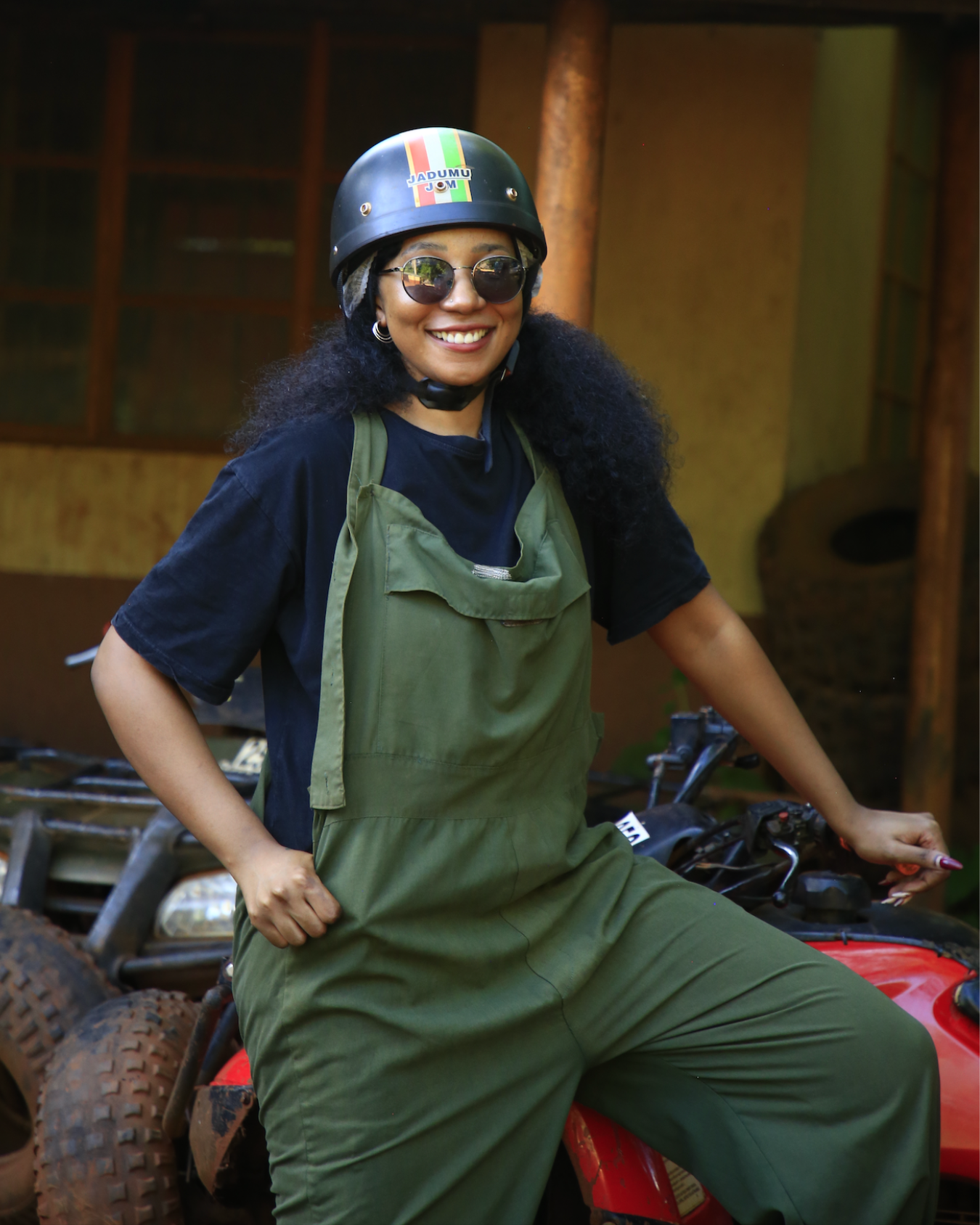
What’s surprised me most about Coefficient Giving is how much it invests in each person getting better. The first sign was our feedback culture. In past roles, sharing work for review often meant a hurried skim or a perfunctory sign-off, so I was prepared for something similar here. Instead, each time I’ve presented my work, I’ve received thoughtful, timely responses that show real investment in my learning. It’s sped up my onboarding, and it’s inspired me to give the same kind of considered feedback in return.
What makes that more striking is how busy everyone is. CG is full of experts with deep knowledge of their fields, and I’d have understood if people guarded their time closely. Instead, there’s an open exchange of information: Slack channels for soliciting advice, lunch-and-learns and round tables, and a common belief that helping each other get smarter and faster is part of our jobs, not a distraction from them.
That investment goes hand in hand with real room to bring your full self to work. Across the People Operations team and the wider org, I’ve been struck by how comfortable people feel being their authentic selves. There’s a common thread of real care for each other, and for the humans and animals our work touches, that makes CG feel like a professional home.
Aman Patel, Senior Program Associate, Biosecurity & Pandemic Preparedness
Joined February 2026
I joined CG’s biosecurity team with a very specific mission: help ensure humanity can survive “environment-to-human” pathogen scenarios where the outdoor air becomes infectious.
I knew I would be coming on to the team with a targeted role, but after joining, I quickly realized that my day-to-day looks nothing like what you’d expect of a traditional “grantmaker” role. I’m almost never responding to unsolicited proposals. Instead, nearly all of my work is figuring out what needs to happen to achieve my mission, and then making it happen.
For example, I’ve been reaching out to prototyping engineers to design DIY respirators that people can assemble from household materials; contamination-control experts to advise on the best hygiene protocols for emergency scenarios; and academic labs to test improvised building-scale protection.
One mechanism I’ve used is a “mini request for proposals” where I:
- Identify a specific asset that I think should exist, but doesn’t yet, like a strong data package or an open-source instruction set.
- Write a short PDF of what I’m looking for and circulate it to expert groups I think could deliver it well.
- Select a few of those groups to perform the work, then work with them to strengthen their plans.
This has allowed me to bring new projects into existence from scratch, and also to surface old projects that were never executed but hold a lot of promise.
Over time, I’ve come to think of my job as making good outcomes happen in the world. Grantmaking is a very useful tool for that, but we have other tools too — like publishing posts on our team’s blog and encouraging talented people to transition their careers into biosecurity. If you’re the kind of person who’s adept at tackling complex and poorly-structured problems like these, biosecurity could use more people like you. Consider registering your interest in working on it!
Derek Hopf, Chief Operating Officer
Joined June 2017
Operations is often imagined as mostly administrative — keeping the lights on so grantmakers can do the interesting work. Nine years in, that’s been pretty much the opposite of my experience. Across our Ops teams, we constantly push each other to rethink how things are done and build better ways of doing them. In practice, that often means looking for the fix that makes a problem go away for good, not a quick patch. Sometimes that includes building something that doesn’t exist yet, or pulling in the right skills from wherever they sit rather than staying inside team lines.
A few examples: Our IT team works to keep us at the frontier of using AI well, and we (very roughly) estimate AI tools save us about 450 hours a week across the org. Our Grants and Legal teams recently took an urgent $5 million grant from initial approval to funds paid in less than 72 hours. Our immigration and workforce specialists work hard to allow us to hire world-class talent from almost anywhere. And we’ve deliberately built an unusually wide range of ways to disburse funding — from classic charitable grants to policy and advocacy support, impact investments in promising organizations, and pooled funds run alongside other donors — so we can back good work in whatever form suits it best, instead of only funding what fits a certain structure.
Getting to work on important problems, with real freedom in how we solve them, is a big part of what keeps Ops work at Coefficient engaging and meaningful.
Elbert Ventura, Senior Editorial and Communications Officer
Joined April 2026
Lots of companies talk a good game about caring for their employees’ wellbeing; some of them even mean it. A happy and healthy workforce, the thinking goes, is a productive and efficient one, and the benefits that bolster morale can redound to the company.
What has struck me about Coefficient, three months in, is how much that philosophy shows up in the day-to-day. On my first day, I got an office-wide Slack message asking us what our lunch order would be. That’s nice, I thought. They’re buying lunch because it’s the first day for a couple of us in the D.C. office. But then the same thing happened the next day. And the next. Turns out if you’re in the office, CG will buy you lunch — a nice perk for time-strapped workers and a cool mechanism to have us congregate in the kitchen when the food comes.
Another perk that I’ve come to love (and that I had never encountered anywhere before) is our “productivity benefit.” CG encourages you to think really hard about how you use your time, and to expense (within an annual cap) goods and services that allow you to make more efficient use of your workday. For me, that’s a house cleaner. With two kids and a very fluffy cat, I could devote hours every week to keeping the house in order. CG covering that cost frees up those hours, which I can then allocate back into my work — all around a better use of my time.
Having that flexibility to decide on tradeoffs between time and money is a wonderful feature here, and indicative of an admirable and empowering ethos: Simply put, this is as high-trust an office culture as I’ve been a part of. The people who are drawn here are uniquely mission-driven; in turn, the organization puts its faith in us and creates the conditions for us to do our best work.
Naina Bajekal, Managing Director of Communications
Joined July 2024
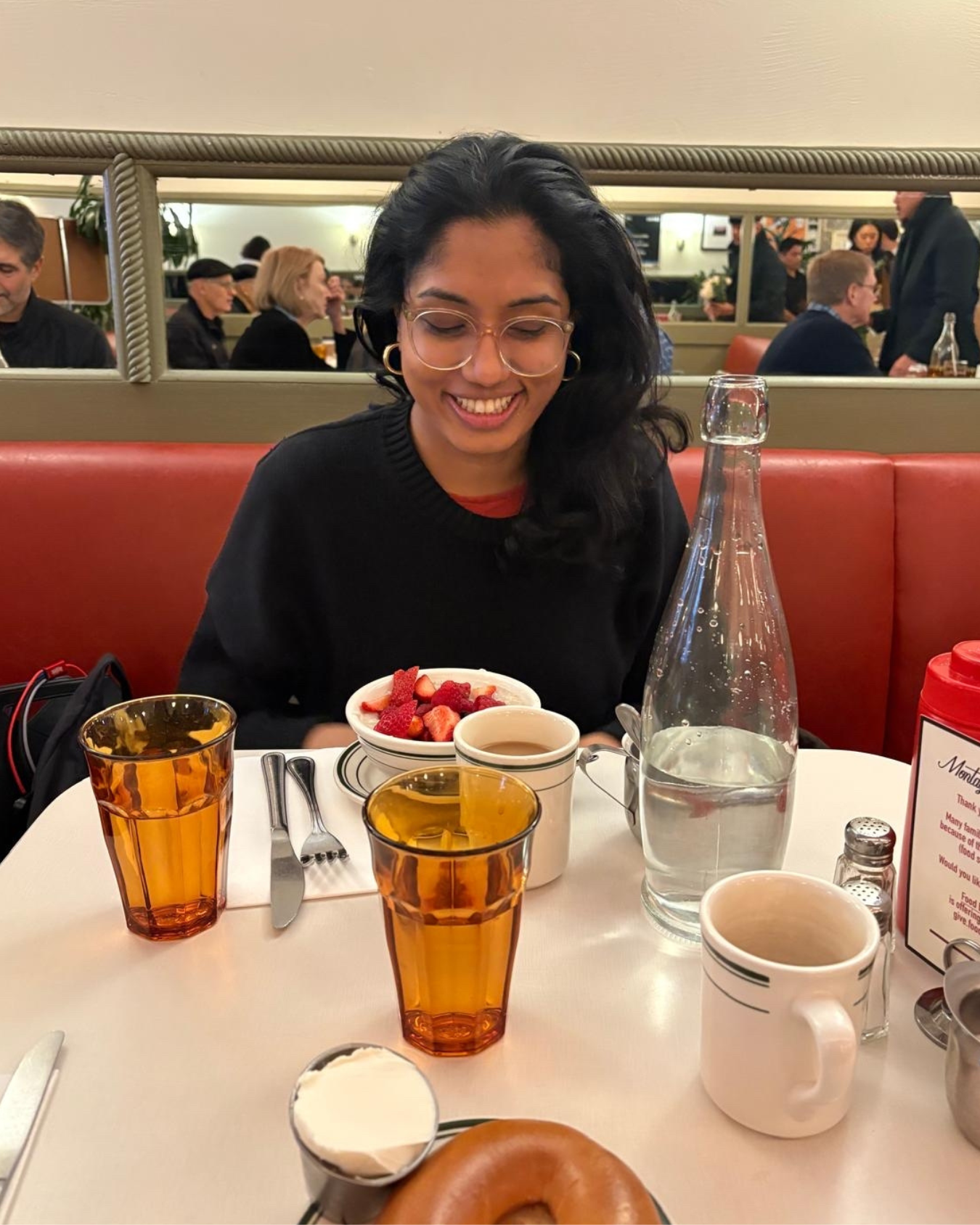
Prior to joining CG, I’d spent a decade in journalism, eight years of it at the same workplace. I’d basically grown up with my colleagues and had so many close friends there that I loved seeing every day. It was hard to imagine starting a new job without real social connections, even though I knew that wasn’t a good enough reason to stay.
Part of my worry was that I assumed CG would be too serious for me, filled with a lot of high-minded people doing hard moral math. I worried that given the seriousness of the problems we work on, the culture would be correspondingly hardcore. While I care deeply about the causes we work on, I also love books and art and music and a range of other delights that make living in New York so wonderful.
There’s some truth to the moral seriousness of CG — at least four of my colleagues have donated their kidneys to strangers! — but I’d underestimated how fun those same people would be to hang out with. Many of my colleagues are just as comfortable debating philosophy as they are swapping dumb memes, riffing about The Devil Wears Prada, recommending beach reads, or trading interior-design advice. In our new NYC hub, we can discuss the third wave of philanthropy one day, and throw multi-colored bagels to Knicks paradegoers from the office window the next. I’ve flown to Taiwan for a colleague’s wedding, discussed big life decisions over pedicures, and caught Broadway shows with my teammates to celebrate successful projects. My colleagues generally hold themselves to exceptionally high standards when it comes to helping others, and they also happen to be some of the funniest and most interesting people I’ve met.
That’s made it easy to forge real friendships here and stay motivated through the inevitable ups and downs of any job. After years in journalism, where it’s natural to focus on powerful people doing bad things, I’d built up a fair amount of cynicism. Nowadays, I notice it’s softened: I spend my days around so many people sincerely trying to make the world better, and I’m glad that I get to call so many of them my friends.