
Coefficient Giving’s “Day in the Life” series showcases our staff’s wide-ranging work, spotlighting individual team members as they navigate a typical workday. We hope these posts provide an inside look into what working at Coefficient is really like. If you’re interested in joining our team, we encourage you to check out our open roles.
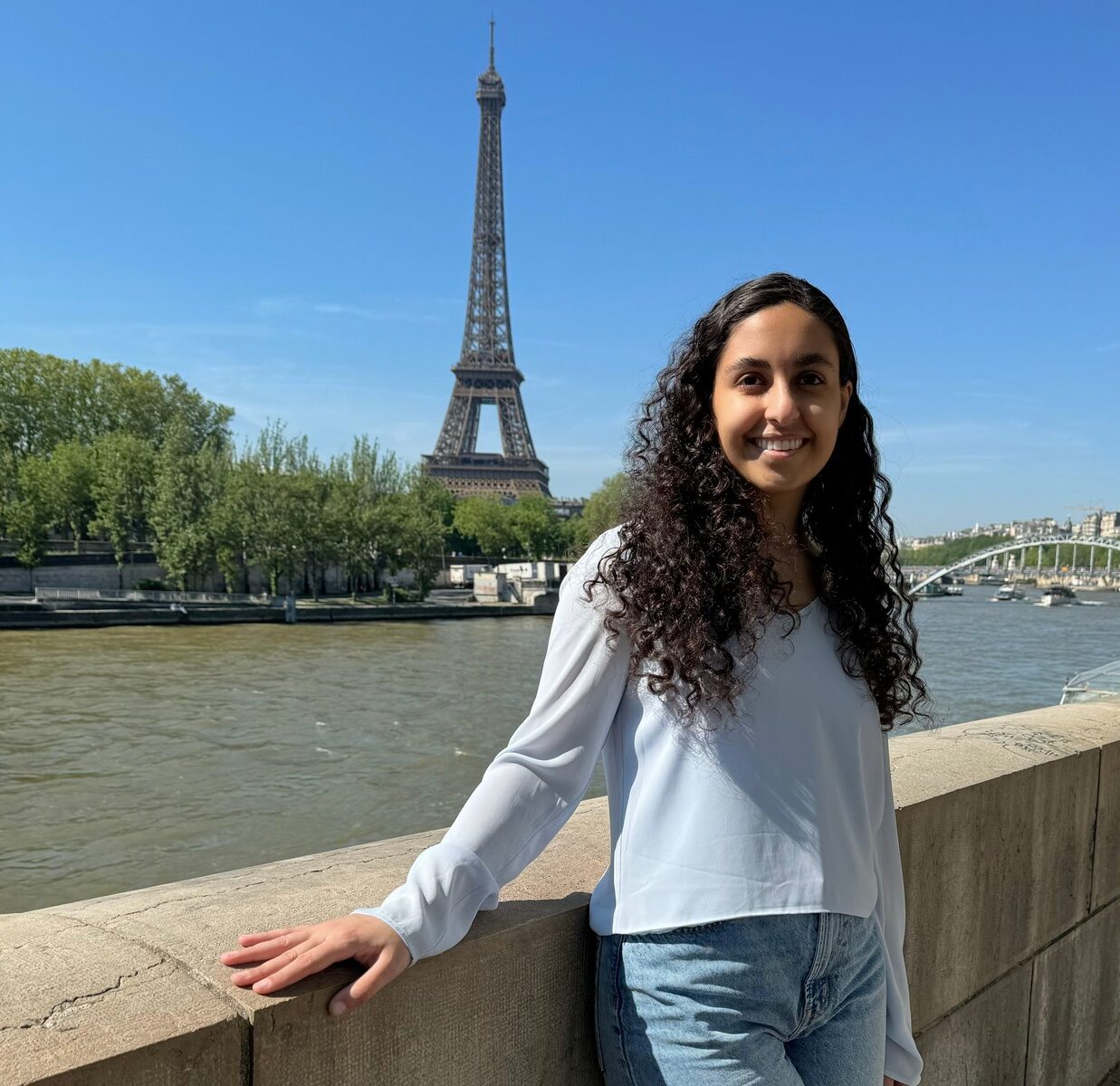
Deena is a researcher and grantmaker on the Cause Prioritization team; she joined Coefficient Giving in January 2024 as the chief of staff for Global Health & Wellbeing. Prior to starting at Coefficient Giving, Deena was a consultant at McKinsey & Company, where she advised clients primarily in the life sciences and public health sectors. She is also a freelance journalist, with articles in The Economist, Scientific American, National Geographic, among other outlets, and writes a regular newsletter. Deena graduated with a B.A. in ethics, politics, and economics from Yale University.
When I tell people unfamiliar with Coefficient Giving that I work on cause prioritization, I’m often met with some confusion — which is fair, as it’s not a very common term! Essentially, my team thinks about how Coefficient Giving should spend its funding, including investigating new cause areas, incubating and making grants in potential programs, and evaluating our methodology and budget allocation.
I manage our “Incubation” portfolio, which covers grantmaking on any topics that fall outside of our existing programs to “incubate” them as mature programs. Right now, two of the areas we’re excited about are AI interventions to improve health and economic outcomes, and education in low- and middle-income countries, though we also make grants in a range of other areas like eye care, migration, and research that can inform our grantmaking.
Today, I’m starting with a grant investigation. I hop on the phone with a potential grantee to ask them some questions. Based on how that conversation goes, I might dive further into the academic literature on a topic, or ask a field expert for a half-hour call. I sometimes ask them to make the best possible case against the grantee’s project to poke at blind spots I may have. Other times, I might get more specific: What are the weak points in the body of research on how the effects of early childhood education interventions hold up over time? What does a particular country typically do with its unspent health funding at the end of the year?
After tracking down some additional data and speaking with a few more experts, I’ll start drafting a back-of-the-envelope calculation to determine whether an opportunity is likely to meet our “bar” for funding.
A few hours into the workday, I decide to go into the office. I live nearby, and I like the rhythm of splitting up my day. After lunch with some colleagues — most people in the NYC office are either on the Comms or Partnerships teams — I spend some heads-down time researching whether we should expand our grantmaking on generic drug repurposing. Our Science and Global Health R&D team has made previous grants in this area, and we recently launched a dedicated request for proposals.
This falls into the “Special Projects” bucket of my work; I occasionally handle one-off, high-priority projects. In this case, I’m mostly interested in figuring out whether the issue is tractable (one of our three criteria for cause selection, along with neglectedness and importance). Is additional funding likely to move the needle, or do other barriers — in this case, the sheer number of off-patent candidates that are plausibly worth investigating — get in the way? I’m also interested in the opportunity costs: How would expanding our work on generic drug repurposing compare to other opportunities?
Later in the day, I catch up with the wider Cause Prio team on a social call. We also meet weekly to discuss ongoing projects, but given how heads-down our day-to-day work can be, it’s nice to chat and occasionally play a game as well (Codenames is a current favorite among the group!).
After work, I head to a dinner with a group of academics, policy folks, start-up founders, and other philanthropic funders interested in the economics of AI. Grantmaking in a fast-moving field requires staying up-to-date, and I often learn things at these dinners that haven’t been published yet. We spend part of the dinner debating the strengths and weaknesses of certain forms of data — like payments data, usage data, benchmarks, and macroeconomic data — in capturing the outcomes we’re interested in.
After dinner, I prepare for an interview I have the next day on The Intelligence, The Economist’s podcast. I’m going to speak about an article I published in their most recent issue on the underperformance of large language models in low-resource languages, so I jot down a few bullet points I’d like to hit. While this work isn’t technically part of my job, it informs my thinking in multiple ways. In reporting a piece, I aim to ask sharp questions of people who are on different sides of an issue. Writing, for me, is a form of thinking; getting a piece down on paper in a way that is understandable to a general audience helps clarify what I think is true.