If one were to throw a dart at the Coefficient Giving org chart, odds are it would land on a grantmaker. After all, grantmakers make up a significant portion of our staff. Whether as Program Associates or Senior Program Officers, grantmakers at Coefficient are tasked with researching, identifying, and funding work aimed at the biggest, hardest problems we try to address.
In this post, we dig into what that work actually looks like: What is open on their screens? Whom do they speak with regularly? How did they end up here?
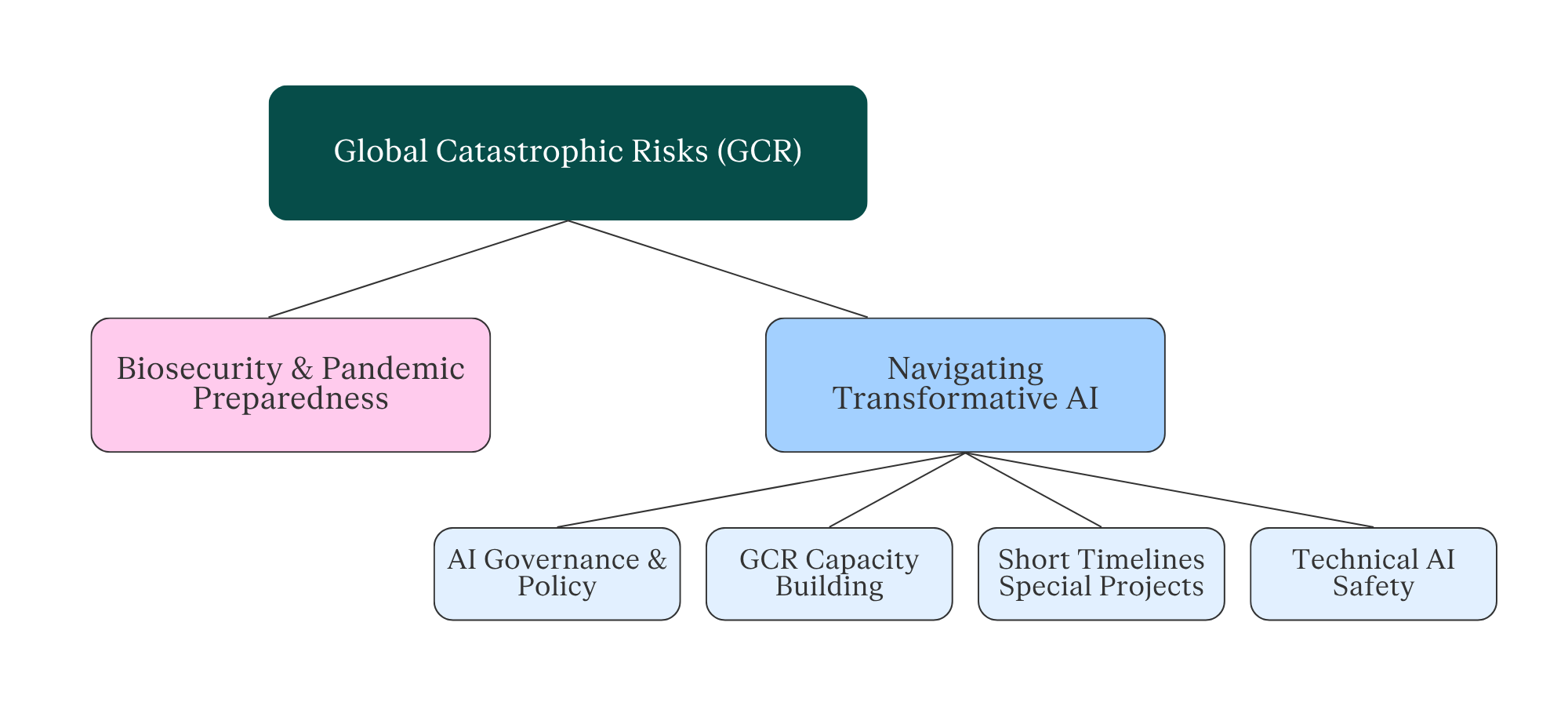
We sat down with three grantmakers across a selection of our Global Catastrophic Risks (GCR) teams — Abbey Chaver, who specializes in infosecurity; Trevor Levin, who focuses on AI Governance & Policy; and Chris Bakerlee from our Biosecurity & Pandemic Preparedness fund — to hear about what fills their days, how grants actually get made, and how they ended up at Coefficient Giving.
We’re actively hiring grantmakers for each of these teams (and others), so if what follows sounds like work that you would enjoy, we hope you’ll apply. The application deadline is May 17.
Abbey Chaver, Associate Program Officer, AI Governance & Policy
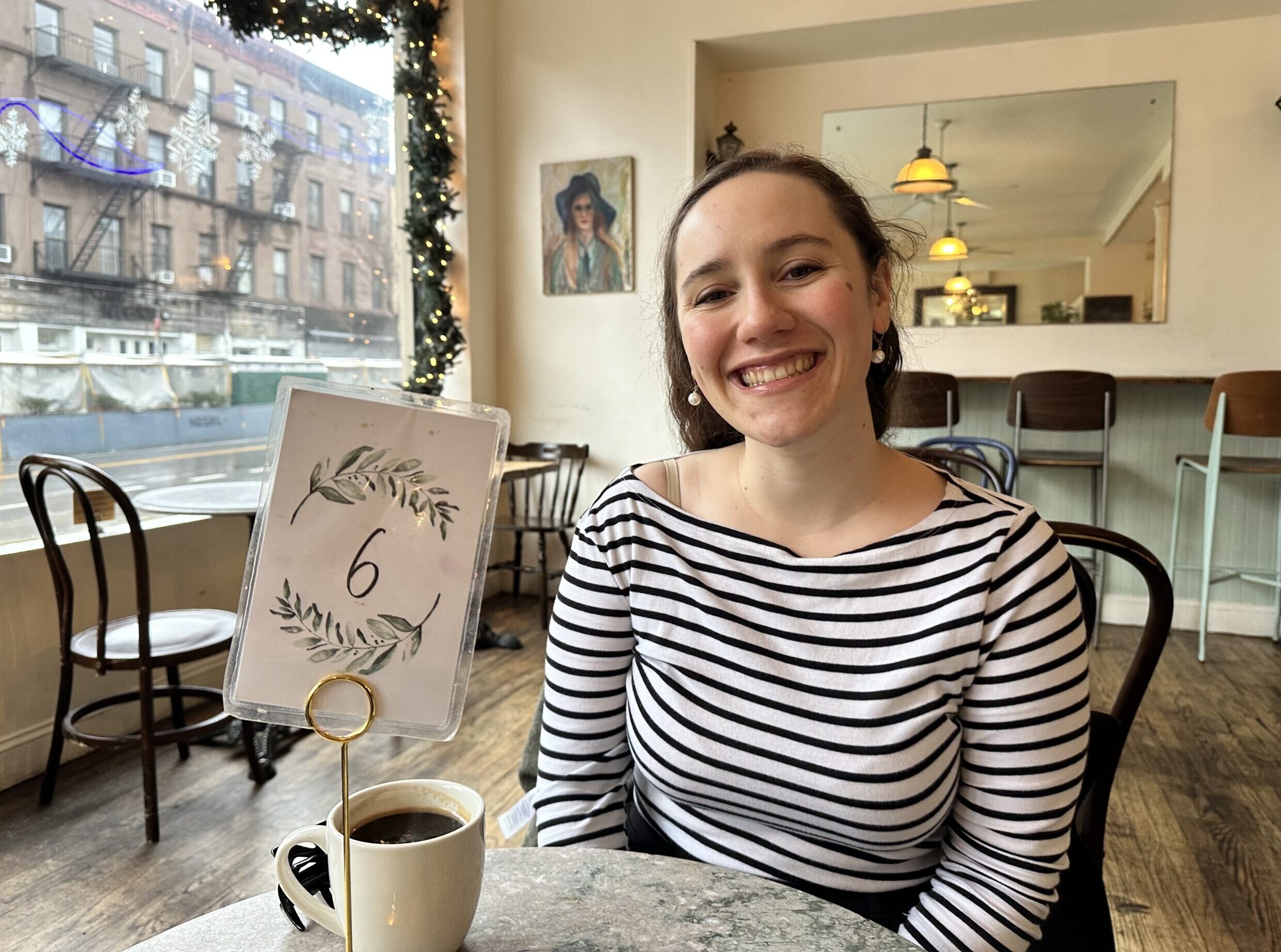
I started my career as a product manager in tech after studying Computer Science and Statistics. I intentionally worked on products designed for positive impact, but I was consistently bothered by the sense that I wasn’t doing the most important thing I could be. Just as I started thinking more seriously about a career transition, I happened to meet Alex Lawsen — my now manager — at a conference, and he put me on Coefficient’s recruitment list.
When I applied to Coefficient, I had a perception that grantmaking was mainly evaluating, and that evaluation wasn’t my comparative advantage. But since joining, I’ve been given a lot of freedom to develop my work around my existing strengths. When I was a product manager, I learned to define a problem statement, generate solution ideas in partnership with technical experts, and then prioritize the most necessary work. These days, I apply the same framework to my current grantmaking focus: AI security.
My first project involved mapping out the security research streams that seemed most necessary for AI to go well, estimating how many people were working on each, and using that to build a picture of where the most pressing gaps were. Then, I started trying to fill them — and that’s what I’ve been doing since.
I mostly focus on active grantmaking — scouting for exceptional talent and projects that align with our funding priorities. I try to bring the same ownership and execution mindset I developed as a product manager, asking questions like:
- What work must be done to reach my goal? Have I missed anything?
- What dependencies are there? What needs to happen first?
- Which stakeholders need to be bought in for this to work? What are their priorities?
- How will I measure whether I’ve achieved my goal?
This mentality is really, really useful for grantmaking. This is especially true in security, where many problems are straightforward execution challenges.
Day-to-day, I find my work really energizing. I spend a lot of time in fascinating meetings: with grantees, brainstorming about how to make their project stronger; with professionals who have the exact background the field needs, trying to sell them on starting a project; or with technical experts, who help me figure out the most important directions to pursue in any given research area. I’ve gotten to learn about areas I’d never touched before, like formal verification, hardware architecture, and techniques for implementing data poisoning. I split my time more or less equally between meetings, research, and writing grant investigations or memos, all of which I find enjoyable.
As a grantmaker, I try to bring a constructive mindset. When I learn about opportunities, I don’t just consider whether a grant clears the bar, but whether I can amplify its impact by identifying the right goal or bringing in key talent. I love developing a collaborative relationship with grantees and building projects around their strengths. I think ambitious thought partnership has led to new momentum in AI security research.
Learn more about the Navigating Transformative AI team’s work here, and apply for a grantmaker role here.
Trevor Levin, Program Officer, AI Governance & Policy
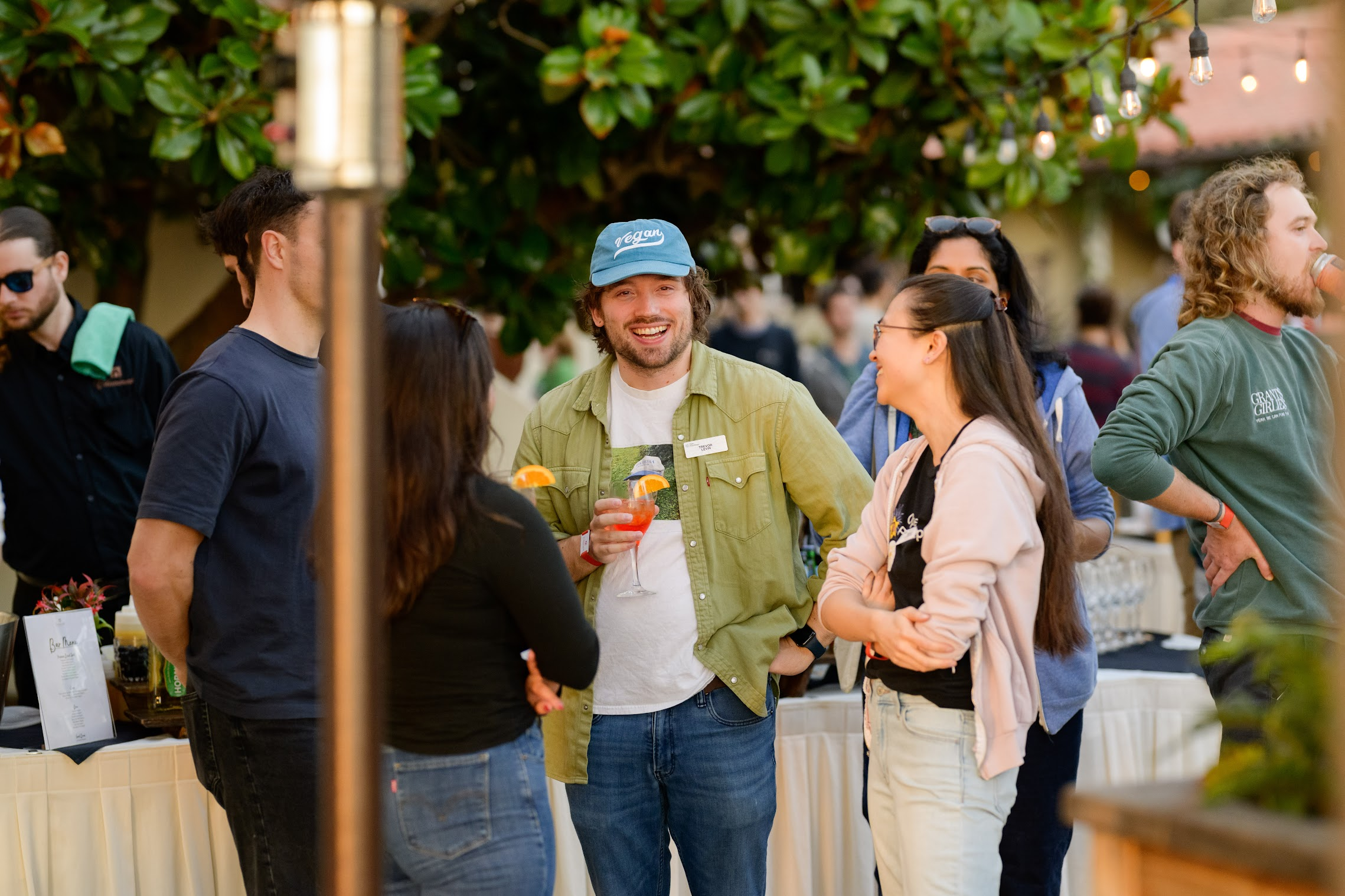
When I decided to major in “social studies,” an a-la-carte combination of philosophy, history, economics, and political science, I had no idea that it would be the closest thing to majoring in policy grantmaking at Coefficient Giving. All I was missing for my current role was some computer science, but despite consuming tons of 80,000 Hours content throughout college, I felt completely uncompelled by working on AI and found housing and urban transportation issues much more interesting. So, after college, I worked in policy at a nonprofit housing developer.
But then The Precipice came out the same month that the world shut down for COVID, and these suddenly made global catastrophic risks feel urgently real, and I decided to pivot careers via grad school. I started a joint degree in law and public policy, and in my first year, I became much more interested in and concerned about AI. So, a few months before ChatGPT was released, I decided to “pause” my degree to focus on AI safety outreach and education at top universities for a year.
Near the end of that year, I got a job on CG’s AI Governance and Policy team and moved to D.C. As our team grew, my grantmaking increasingly focused on U.S. policy, though I’ve also worked on broader team strategy and prioritization.
To walk you through a representative recent Tuesday: I commuted to our downtown D.C. office and had a brief morning standup with my manager to lock in the day’s priorities. I then had an hour-long call with an applicant for a large grant, during which a couple teammates and I followed up on questions that had come up while reviewing the proposal. Then, I spent a couple hours on email and messages, responding to requests for my read on proposals or referrals for a role. Next came lunch with the dozen-or-so colleagues who had come into the office. The afternoon included a conversation with an external funder about whether to co-investigate something outside our usual scope, a call with a grantee to align on success criteria for their project, and two hours finishing a grant write-up, which included organizing the information and making my thinking legible to decision-makers.
Over time, one useful habit I’ve developed as a grantmaker is to ask, early and often, what piece of evidence would be most likely to change my mind, and to seek that evidence out. For example, maybe a proposal seems weak but is in an area I’m not familiar with, and if the right expert vouched for it, I’d change my mind — in that case, I’d try to schedule a fifteen-minute call with that expert to discuss it. Or if the biggest risk is a project lead who seems spread too thin, I’d have a conversation with them to get a read on how deeply they’re thinking about the details, possibilities, and failure modes. The goal is to get the most decision-relevant information as time-efficiently as possible, while avoiding unnecessary work for the organizations you’re evaluating.
Learn more about the Navigating Transformative AI team’s work here, and apply for a grantmaker role here.
Chris Bakerlee, Associate Program Officer, Biosecurity & Pandemic Preparedness
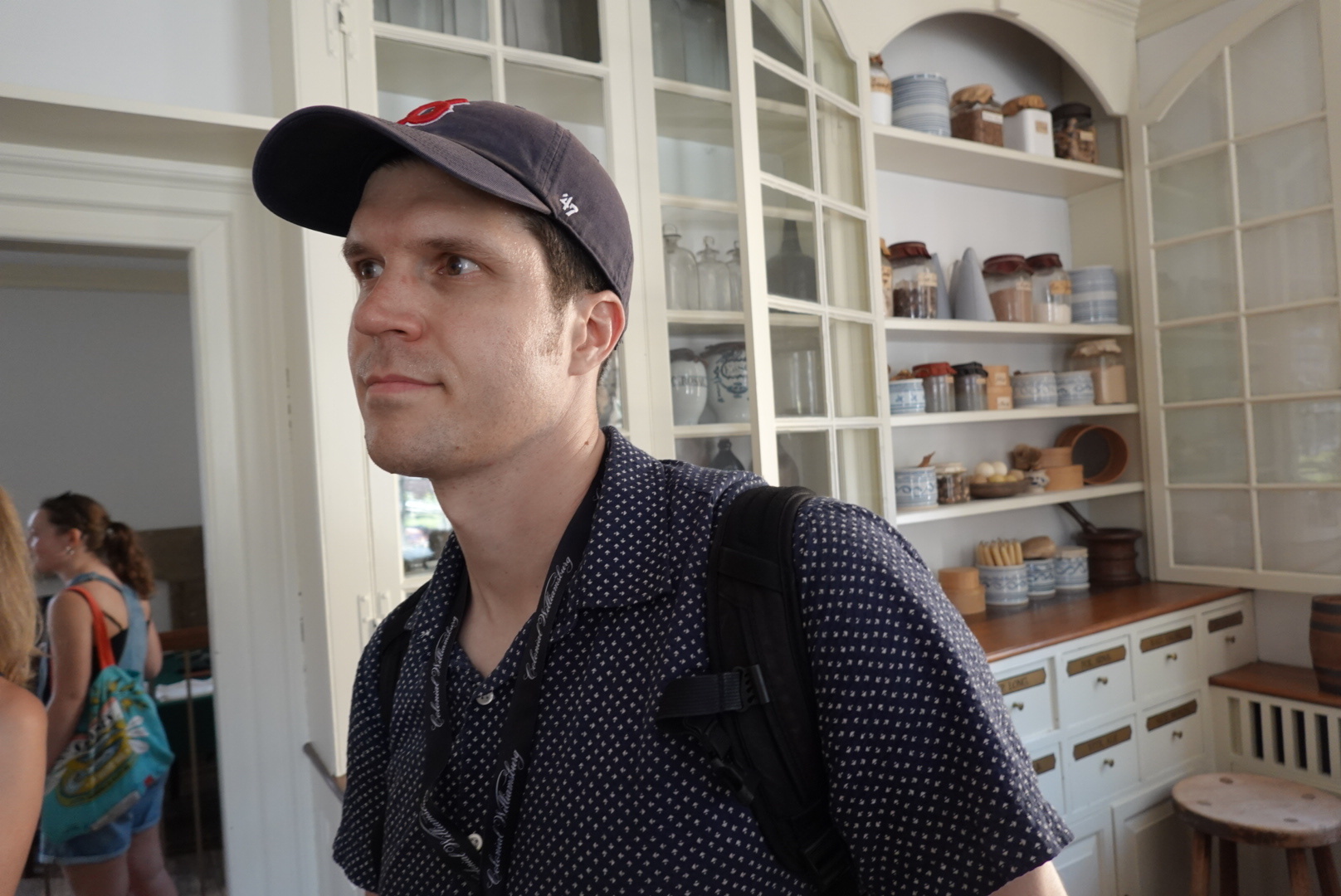
I came to biosecurity work through evolutionary biology — specifically, from years of wet lab research into the nuts-and-bolts of how natural selection and other forces shape genomes and give rise to the staggering biological diversity we see around us. When I started my PhD in 2015, my plan was to try to become a professor running an evolutionary biology lab. Clearly, my plans changed.
My intellectual pivot from biology to biosecurity happened gradually, then quickly. I went into my PhD expecting most of my experiments to fail, and indeed a lot of them did. But I was pretty amazed at how much of what my labmates and I tried actually just worked. Even shot-in-the-dark attempts to engineer a new capability into a cell or virus would succeed from time to time. And the tools we had to do this engineering were only getting better. This was very exciting as a researcher who wanted to make cells do interesting things, and as a human who stands to benefit from future medical advances brought about by this tech. But it was also worrying: I grew more and more concerned that, proportional to the risk, society’s institutions were almost completely dropping the ball with respect to the potential for actors with bad intent — be they countries, terrorists, etc. — to use these same technologies to cause harm on a massive scale. From studying the history of life on geological timescales, I was aware that Earth has seen several mass extinctions (RIP most dinosaurs), and looking back, it’s possible this awareness set the intellectual table for me to take global catastrophic risks more seriously than I might have otherwise.
I was worried enough that I started going to meetings and conferences on biosecurity and pandemic preparedness. Through that networking, I eventually got in touch with Andrew Snyder-Beattie who was, at the time, essentially the entire biosecurity grantmaking operation at what was then Open Philanthropy. There was just so much to be done, and after finishing my degree, I excitedly accepted an opportunity to join the team. This was back in Fall 2021, and I’ve been working on biosecurity ever since.
My work is really varied. Currently, a meaningful portion of my time goes to field building — for example, investigating potential grants to fellowships and programs designed to help people move into biosecurity. Another large chunk is dedicated to finding and funding individuals who could contribute a ton to the field but haven’t yet made the jump. At any given moment, I might be investigating 6–12 grants at various levels of focus, with a lot of my remaining time taken up with making good things happen over email, joining internal meetings, and jumping on networking calls. Right now, I’m helping run a major request for proposals on biosecurity — it’s the first of its kind for our team and has been a big focus for me over the past few weeks.
Not every grant starts with a formal application. For example, earlier this year, I asked a contact at another organization whether they’d met anyone interesting at a recent event. They pointed me to a master’s graduate in Europe with expertise in a field we care a lot about. One conversation and a couple of reference checks later, and I was able to recommend a grant providing several months of full support to this person so they could leave their job and transition to biosecurity full-time. That grant would not have happened if I hadn’t gone looking for it. This is the case for many of our most exciting grants.
The ERA AIxBio Research Fellowship is an opposite example, as it came to me rather than the other way around. ERA had accepted AI and biosecurity fellows before, but they approached me with a proposal for a new program focused on the intersection of these areas, a research area they believed to be severely talent-constrained. I tested their assumptions, checked their track record with colleagues, thought carefully about the theory of change and its potential downsides, asked for more information, and gave input on the program’s structure. In total, slightly less than two months passed from the time I received the proposal to when I made the grant. I was proud to recommend support for this program. It’s always a great day when proposals from talented people targeting the field’s biggest bottlenecks land in my email. I’m hopeful we can get even more of these through our ongoing RFP!
Read about some of the Biosecurity and Pandemic Preparedness team’s work here, and apply for a grantmaker role here.
We’re hiring grantmakers across our GCR teams. If you’re interested in this kind of work or would like to explore whether you’d be a good fit, submit an application by Sunday, May 17.