How the Frugal Science Movement Is Working to Transform TB Testing

Saad Bhamla, an engineer at Georgia Tech, has been at the forefront of frugal innovation, a movement that seeks to build cheaper versions of existing scientific tools, like the $1 hearing aid. His latest innovation could well be another consequential contribution to global public health: a Raman spectroscopy device that can detect tuberculosis, all for under $100. Working in collaboration with Thai researchers Kiatichai Faksri and Noppadon Nuntawong — a connection Coefficient Giving facilitated — Bhamla is hoping to produce at scale Raman devices for much cheaper than the tens of thousands of dollars they typically cost to produce. If successful, the team’s efforts could lead to wide deployment of a tool that can play an important role in the fight against the deadly disease.
—
As program directors at Coefficient Giving, Heather Youngs and Chris Somerville often hear about new findings before they’re published, shared informally by grantees they’ve spent years building relationships with.
It was through a chat like this in 2020 with Saad Bhamla, whose biomimicry work they funded in 2018, that they learned about a project he had just started. An engineer at Georgia Tech, Bhamla is a leading figure in the frugal innovation movement, which is dedicated to inventing cheaper versions of existing scientific technology for use in low-resource settings. His greatest hits — a $1 hearing aid, a 20-cent blood centrifuge — sound almost too good to be true.
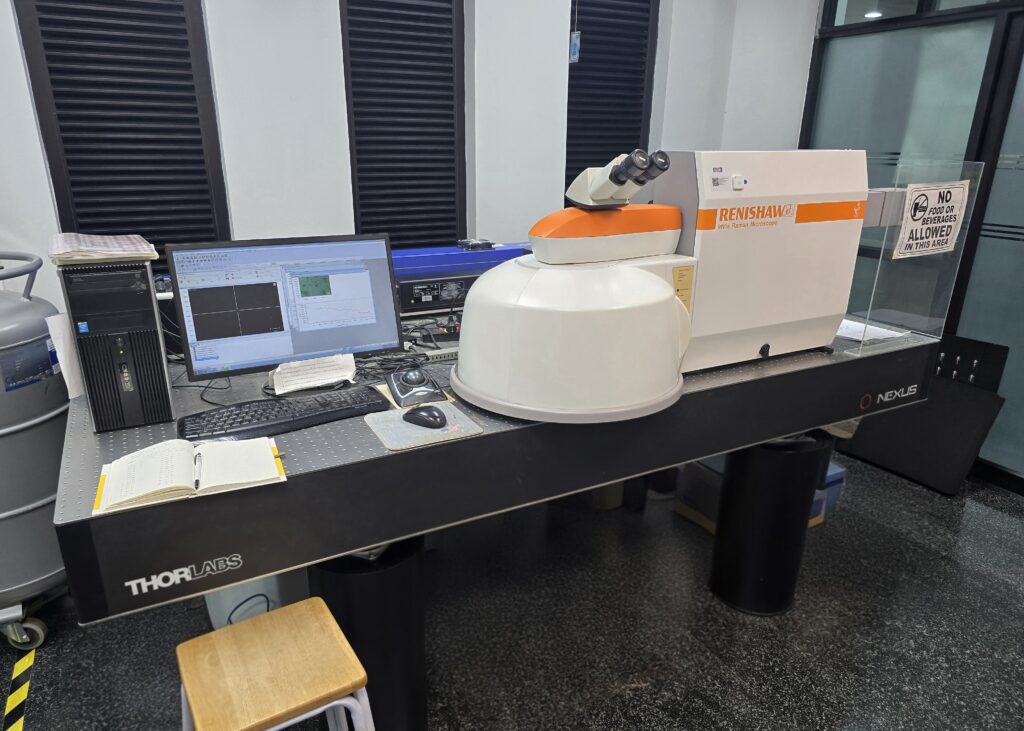
Even more ambitious was his new idea: a handheld Raman spectroscopy device that costs less than $100 to produce at scale. If Bhamla could reduce the price of a sensitive Raman device, he thought it might open up new applications — recent research has shown the potential of Raman spectroscopy for diagnosing malaria, Ebola, Alzheimer’s, tuberculosis, and other diseases.
Raman devices are used in a range of applications for molecular analysis. In Raman spectroscopy, a laser is used to illuminate a sample, after which a small portion of the scattered light shifts in wavelength due to interactions with molecules in the sample. The end result is akin to a molecular fingerprint — each molecule scatters light in a distinct way, providing information about the sample’s chemical makeup.
While Raman devices are highly sensitive, most setups cost tens of thousands of dollars. Portable machines costing a few thousand dollars can handle less demanding tasks, such as analyzing geological samples, but aren’t sensitive enough for proper chemical analysis.
Bhamla figured his idea was too preliminary for federal funding, so he applied for an internal grant at Georgia Tech. No luck.
“I think they considered the idea too outlandish,” he says. Neither Bhamla nor Youngs and Somerville were surprised, as funding for tools is relatively neglected. “It can be hard to get funding from the normal agencies, even though some of the biggest advances in science happen when new tools push the research forward,” says Youngs.
As Youngs and Somerville thought over Bhamla’s idea, they remembered a 2020 paper by Kiatichai Faksri, Noppadon Nuntawong, and other colleagues suggesting that a specialized Raman spectroscopy device — which costs around half a million dollars — could distinguish between active and latent TB infection (LTBI) around 91% of the time, and between active and the healthy control (i.e. no TB) 87% of the time.
An estimated quarter of the world’s population has LTBI, which can progress into active TB, a disease with a 50% mortality rate when left untreated. The only approved TB vaccine has limited efficacy in adults and adolescents, and concerns over antibiotic resistance make mass preventive treatment infeasible. A rapid, point-of-care TB test would allow doctors to provide targeted preventative treatment to high-risk patients.
The Thai team’s preliminary findings served as proof of concept, and Somerville and Youngs proposed that they expand the study, in partnership with Bhamla. “Honestly, I thought Chris’s initial email was spam at first,” Faksri says. “Hearing from him was a huge surprise.”
The partnership was a natural fit. Faksri and Nuntawong had a robust collection of TB samples, and deep knowledge of areas like TB biology and Raman spectroscopy, both outside of Bhamla’s expertise as an engineer. Bhamla credits Somerville and Youngs for introducing the two teams: “To connect the dots between our research and the work in Thailand, and then actually connect the two groups to collaborate — I don’t know who else would do that.”
The Thai team was excited but skeptical: Bhamla’s proposed Raman device would be nearly 5,000x cheaper than the one at Nuntawong’s university. “When Bhamla told me he wanted to make a device for less than $100, I thought it sounded impossible,” says Nuntawong, grinning. But Bhamla’s reputation preceded him: Faksri and Nuntawong had seen the headlines about his $1 hearing aid. If anybody could reinvent a $500,000 device for less than the cost of a mid-market vacuum cleaner, it was Bhamla.
By late 2022, Bhamla, working closely with Ph.D. student Rajas Poorna, had a working prototype of the device. While Bhamla can’t share specifics about how the device works — it has not yet received a patent — he notes that their prototype achieved a sensitivity comparable to expensive Raman devices used for analytical chemistry work.
The team had also met their $100 cost target, with a few dollars to spare. Bhamla says the tight budget helped. “Whether it’s $1 or $100, constraint forces creativity,” he says. Based on the strength of the prototype, Somerville and Youngs renewed Coefficient’s support for Bhamla in 2024, and for Faksri and Nuntawong as continued collaborators.
While Bhamla’s team works to improve the device, the Thai team is expanding validation and field testing. In a recent follow-up study with a much larger sample size, they tested Raman’s ability to distinguish between LTBI and healthy controls — currently a significant barrier to proactive treatment. They found that their sensors achieved accuracy levels of 75-81%, aided by advances in machine learning that can automate interpretation and detect subtle chemical signatures that experts might miss.
Nevertheless, a key limitation remains: The performance of the chips that power the sensors varies across production batches, making it difficult to tell whether differences in accuracy are due to overall approach or sensor quality. To address this challenge, Nuntawong and his colleagues are involved in a project to improve and standardize fabrication of the chips, known as SERS chips (short for “surface-enhanced Raman spectroscopy”).
Meanwhile, Bhamla’s team is exploring an alternative solution: bypassing SERS entirely, by employing an enhanced Raman device based solely on intrinsic Raman measurements. Both sides anticipate that these projects will improve the overall sensitivity and robustness of this technology for disease diagnosis, particularly TB.
The Thai team’s research represents a significant step forward in the detection and treatment of TB. If Bhamla’s low-cost device can achieve similar accuracy, it could realistically move toward deployment.
“We want to expand the sample database, but right now, we know that Bhamla’s device has high potential and is likely to become effective in practice,” says Faksri. If proven effective, the device could transform point-of-care diagnostics in rural, low-income contexts — “under the mango tree,” as Faksri puts it — for TB and many other diseases.
Bhamla knows that the real challenge lies ahead, in training, persuasion, local manufacturing, and adoption — in short, everything before the device reaches the people for whom it was built. To help lay the groundwork for a thriving community, he has worked with the National Institutes of Health to establish frugal innovation programs in Thailand, at local high schools in Georgia, and beyond. “I can write a paper, I can file a patent, I can demonstrate a widget,” he says. “But how do you engage with the communities? The younger me didn’t realize this.”
When C.V. Raman won the 1930 Nobel Prize in Physics for discovering the light-scattering phenomenon that now bears his name, he claimed to have “spent hardly 200 rupees” (roughly $73 USD, or $1,400 adjusting for inflation) on his equipment. While he likely exaggerated this number, the joint efforts of Bhamla, Faksri, and Nuntawong to drive costs down carry something of Raman’s original spirit. “It’s why we love frugal innovation,” says Youngs. “It’s about democratizing science.”