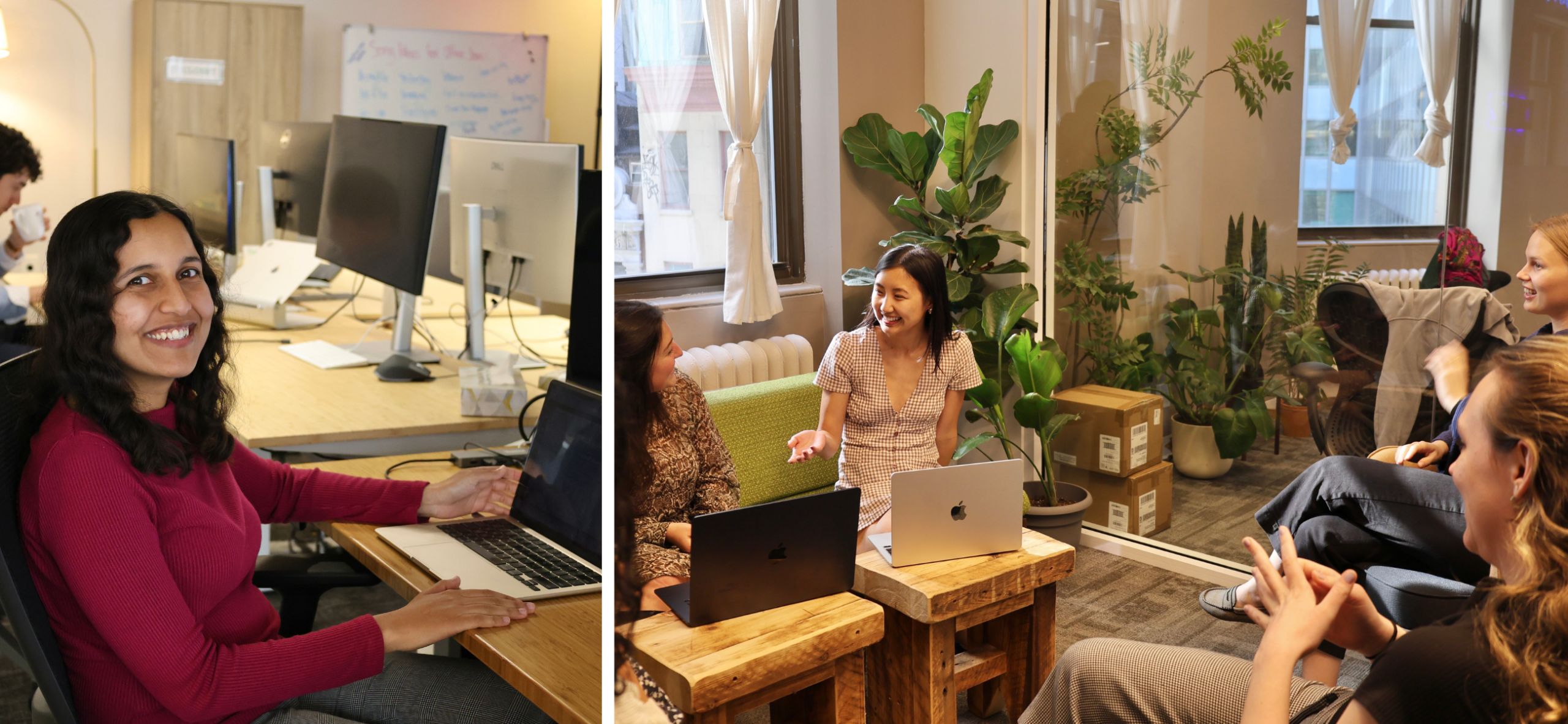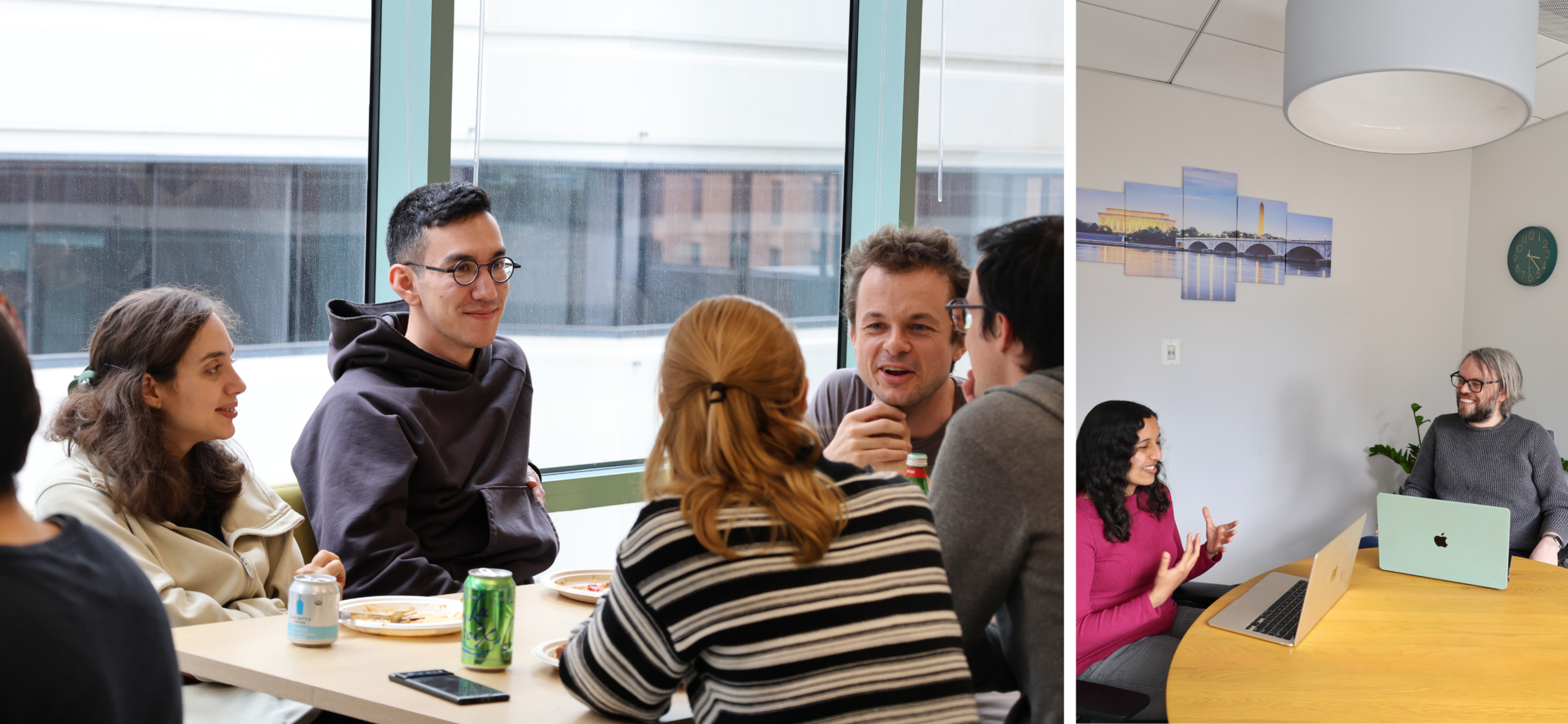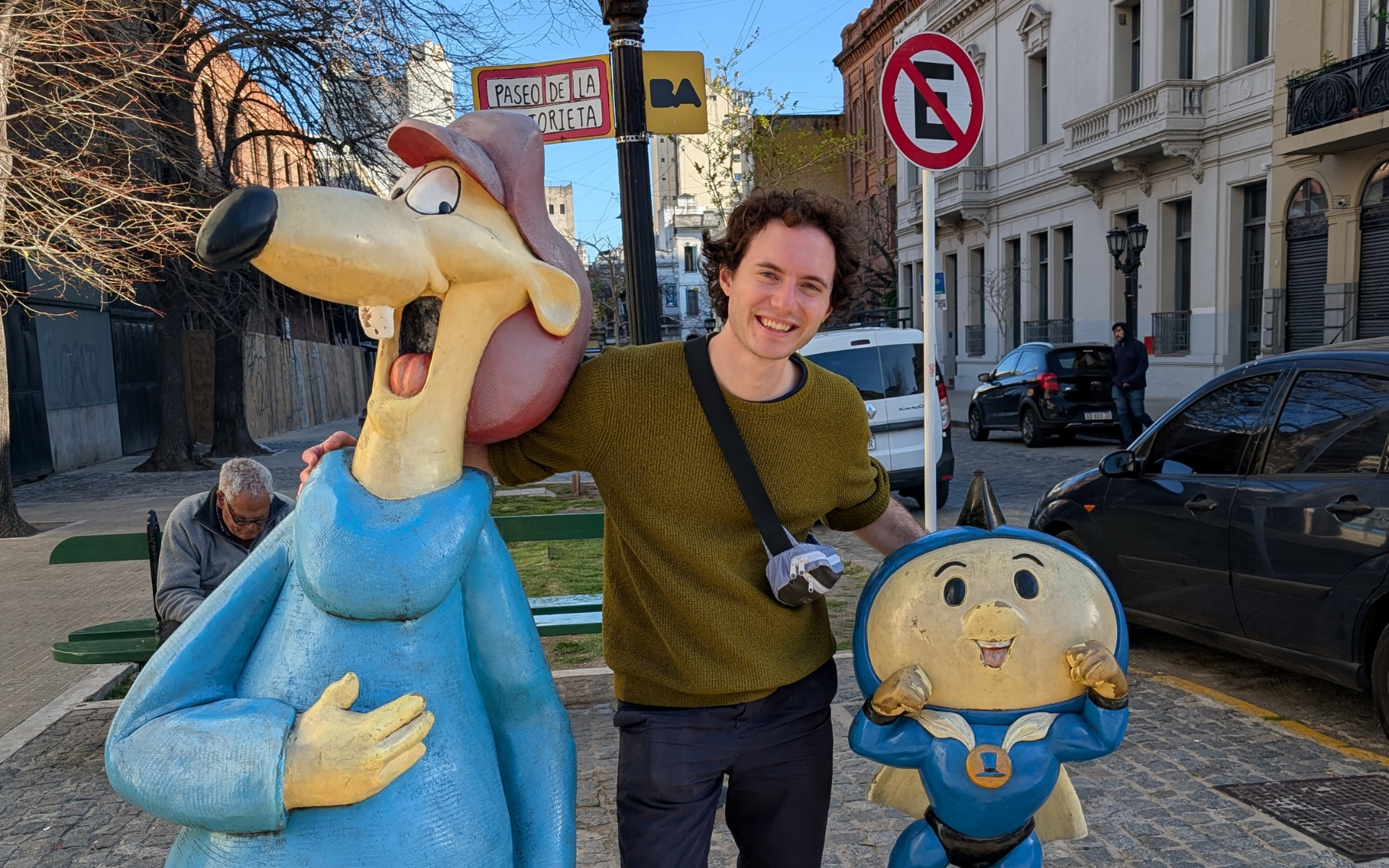
I just moved to D.C. a few months ago, and while I was a die-hard work-from-homer before that, our lovely office in Downtown D.C. has fully converted me. Now I’m there almost every weekday!
When I get into the office in the morning, my first stop is a coffee from the kitchen, then I drop my stuff at my desk. As the office fills up, I say hi to teammates across funds and focus areas, including people working on energy and housing policy, AI safety, biosecurity, global economic growth, and — the jokesters of the office — a few of our lawyers. Fun fact: Before he joined CG, Dylan Matthews was a favorite blogger of mine and the person who inspired me to donate my kidney. Now he sits at the desk right next to mine!
At lunchtime, many of us tend to congregate around the kitchen island. Conversation bounces from work talk to weekend plans to recent viral tweets (or recent viral posts in the CG Slack, my own favorite social media). We often land in some way or another on childcare anecdotes and tips, since we have so many young parents in the office. When I have kids, I’ll have at least five of my coworkers on speed-dial, since they tend to be both immensely well-informed and unusually willing to lend a hand.
One thing I really appreciate about the office is the ability to focus wholly on my work (noise-canceling earbuds blasting BRAT go a long way) while still feeling connected to the really inspiring people who work at Coefficient. A few of my favorite office rituals are going for strolls with Kate, complaining about the weather with Sam, and sharing fries with Abie. Leaving the office at the end of the day feels a bit like leaving my favorite library or cafe from back in college: saying goodbye to friends and the space itself, and looking forward to seeing them all the next day.
I moved to San Francisco about four months ago from Boston. I’d been working fully remote before, so having an office to come into has been a welcome change. I have less team time in my new role, which has made in-person touchpoints feel even more meaningful — being able to see the same friendly faces each week has helped me settle into a new city and a new routine.
I typically go in two to three days a week, depending on my meeting schedule. My routine is pretty shaped by time zones — I mostly work with people in the UK or across Central and Eastern time, so early meetings are common for me. On those days, I’ll stack calls in the morning and head in for the afternoon; on days without an 8:00 a.m. start, I’ll go in for the full day. Either way, the office feels less like a requirement and more like a reset: a place different enough from my home office that it actually changes how I work.
I typically work from the bullpen, our open floor section, where desks are arranged in pods of four. We’ll sometimes do group pomodoros in the afternoons: 25 minutes of focused work, five-minute break, repeat. I love these because I tend to hit a dip around 2:00–3:00 p.m., and they’re a helpful way to push through while adding a bit of fun to the afternoon.
When I need a change of scenery, I’ll work from rooms called Giggle or Marriage Equality. (Our offices are named after emojis on one side of the office, and philanthropic wins on the other.) One side overlooks Salesforce Park, the other faces the water, so you’re never far from a good view. On nice days, I’ll take “walking meetings” strolling through the park or along the bay by the Ferry Building. It’s one of the perks of working in downtown San Francisco that I don’t think I’ll ever take for granted.
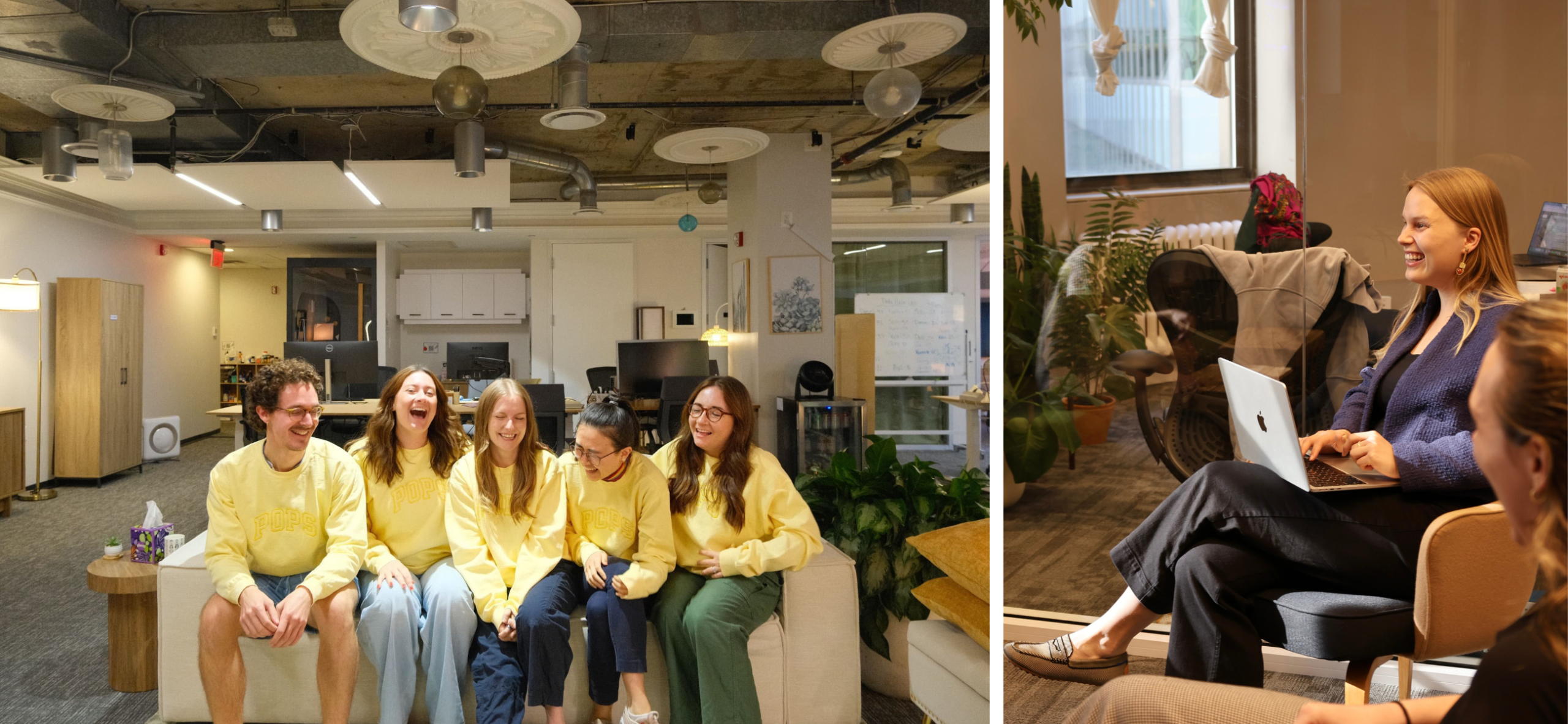
I joined Coefficient Giving in January 2026 and quickly became an avid member of the NYC coworking crew. We have a private office in a coworking building in the Financial District. About eight of us are there most days, with another five or so joining regularly.
As a recent transplant to NYC, the neighborhood alone is a perk. The Charging Bull sits directly outside our building with its rotating cast of creative tourists, One World Trade Center is a short walk away, and there’s a buzzy sense that important things are happening all around us.
Inside, the space itself is great — our office is situated within a coworking hub for mission-driven professionals, which means regular exposure to people tackling big problems via lunch-and-learns, trivia nights, and spontaneous hallway conversations. There are also plentiful snacks, ergonomic equipment, and comfortable phone booths, but it’s the people who really make it. We eat lunch together most days, discussing everything from AI timelines to the latest Broadway play. We’re never short of laughs, or creative troubleshooting.
CG pairs new team members with a more tenured colleague who serves as an informal thought partner and onboarding guide. My buddy Kirsten lives in NYC, and having her nearby has been a gift. Over coffee or walks every couple of weeks, we’ve covered everything from decoding CG’s Slack emoji meanings to what it actually means to write with calibration. As someone who works in a different city from my manager and closest teammates, the NYC crew has been instrumental to my onboarding and feeling connected to CG as a whole.
I’m incredibly thankful for CG’s flexible location policies. I currently live in Brasília, the capital of Brazil, but next year I’ll be off to somewhere else in the world. My partner is a diplomat, so having a remote-friendly role is a necessity for me. Over the last several years, I’ve lived and worked in São Paulo, Brazil; Kampala, Uganda; and my hometown of Hadley, MA. One of the reasons I originally applied to CG was the organization’s global work policy. From the recruitment process, to my international moves, to my beautiful (and ergonomic!) home office setup, I’ve always felt fully supported by CG in my unique work situation.
While navigating time differences with colleagues around the world can be tricky, I like to think I work in the best time zone in the whole company: one to two hours ahead of the East Coast and right between Europe and the West Coast. I get a few quiet hours each morning before my U.S.-based teammates come online, and I sign off each evening in time for dinner with my family. Most of my heads-down work happens from my home office, but every Friday I spend the morning working from one of Brasilia’s lovely outdoor cafés. Occasionally I’ll meet up with other remote workers, but no matter the company, these mornings always include a cup of local coffee, toast, and fresh tropical fruit.
Remote work can be isolating, but CG builds in many thoughtful ways to stay connected. I have daily standups with the Salesforce team, get randomly paired with colleagues for social video calls, and join biweekly meetings with the whole Ops team. By far, the thing I appreciate most as a remote worker is CG’s Co-Division Weeks. A few times each year, most of the org flies in to spend a week working together out of the San Francisco office. These weeks include a low-key mix of programming, coworking, and socializing. The Salesforce team has developed our own set of traditions for these get-togethers, including grabbing morning coffee at the Ferry Building, dinner out at our favorite vegan sushi restaurant, and an ever-growing list of tiki bars we’ve worked our way through across the city. When I return to Brasilia after these in-person weeks, the remote stretch ahead feels a little easier.