How LEEP Is Eliminating Lead Paint, One Country at a Time
By
Aaron Gertler
Imagine buying paint for your home. You might compare prices, think about how the different shades complement your furniture, or weigh the benefits of a matte or glossy finish. Not exactly a high-stakes decision, right?
But what if one of the brands contains toxic levels of lead, and you have no way of knowing?
This isn’t hypothetical. In dozens of low- and middle-income countries, much of the paint supply contains dangerous amounts of lead. With weak or nonexistent regulations, no one knows which brands are safe. Simply by choosing the “wrong” paint, millions of parents unwittingly expose their children to a toxin that can cause irreversible damage.
The Lead Exposure Elimination Project (LEEP) is working to end this public health crisis, which has received little attention from the global health community relative to its devastating effects. Launched in 2020 through the Charity Entrepreneurship incubation program, LEEP has already worked with governments and manufacturers in over 40 countries.
It’s relatively simple to test paint for lead content and reformulate it without lead, and LEEP has made rapid progress. Its first project involved working with the government of Malawi to update regulations and build testing capacity while simultaneously helping paint manufacturers source non-toxic ingredients. In only two years, the share of lead paint in Malawi’s market dropped by over 50%.
Hundreds of thousands of Malawian children will now grow up in safer environments, at a cost of less than $2 per child. LEEP is seeing similar progress in most of the other countries where they’ve attempted to replicate this model.
We spoke with Clare Donaldson, LEEP’s Executive Director, about the lead paint crisis, LEEP’s methodology, and her fond memories of watching paint dry.
What’s the elevator pitch for LEEP?
Lead poisoning is a huge problem. Many of your readers may be familiar with the Flint, Michigan crisis in the U.S., where 1 in 20 kids had elevated blood levels, above 5 micrograms per deciliter.
In low- and middle-income countries, that number is closer to 1 in 2 — and that’s not because of a particular emergency, it’s just how things are. So something people rightly saw as a terrible crisis in Flint is happening on a much bigger scale throughout much of the world.
The good news is that there are lots of ways to make cost-effective progress. At LEEP, we started with paint. You don’t need lead in paint, and the barriers to removing it are completely surmountable. So it’s possible to prevent a lot of lead poisoning for a lot of children around the world.
Something people rightly saw as a terrible crisis in Flint is happening on a much bigger scale throughout much of the world.
What led you to join the organization?
Lucia Coulter and Jack Rafferty co-founded LEEP after the 2020 Charity Entrepreneurship program. I’d done the program the year before, so I was in the network and knew they were looking for a third director. I knew Lucia from our days at Cambridge together where we were involved with campus organizations focused on social impact. I was doing a PhD in Earth Sciences at the time — actually on volcanoes. But over time, I became increasingly motivated to work on something that would have a positive impact on more people. That’s what ultimately attracted me to join LEEP.
Why does lead paint get so little attention? Unlike some neglected problems, it affects everyone, not just people with lower incomes; if I’m a rich person getting my house painted, I’d want my government to make sure the paint was lead-free.
Lack of awareness is a huge factor. Lead paint doesn’t tend to cause high enough blood lead levels to produce symptoms right away. And it’s very rare for people to have their blood tested for lead, so they might have somewhat elevated levels and be completely unaware. There’s a lack of data on the problem in many places.
Also, lead paint is a multifaceted issue; it’s related to public health, the environment, trade, even education. But that means no one naturally “owns” the problem — in governments, and in the development sector.
Finally, until recently, it wasn’t obvious what to do about it. That’s changing, with new work showing how governments can address lead, but the area is still quite nascent. For something like malaria, there’s a very well-established playbook for how a country should respond; one of LEEP’s goals is helping to write that playbook for lead.
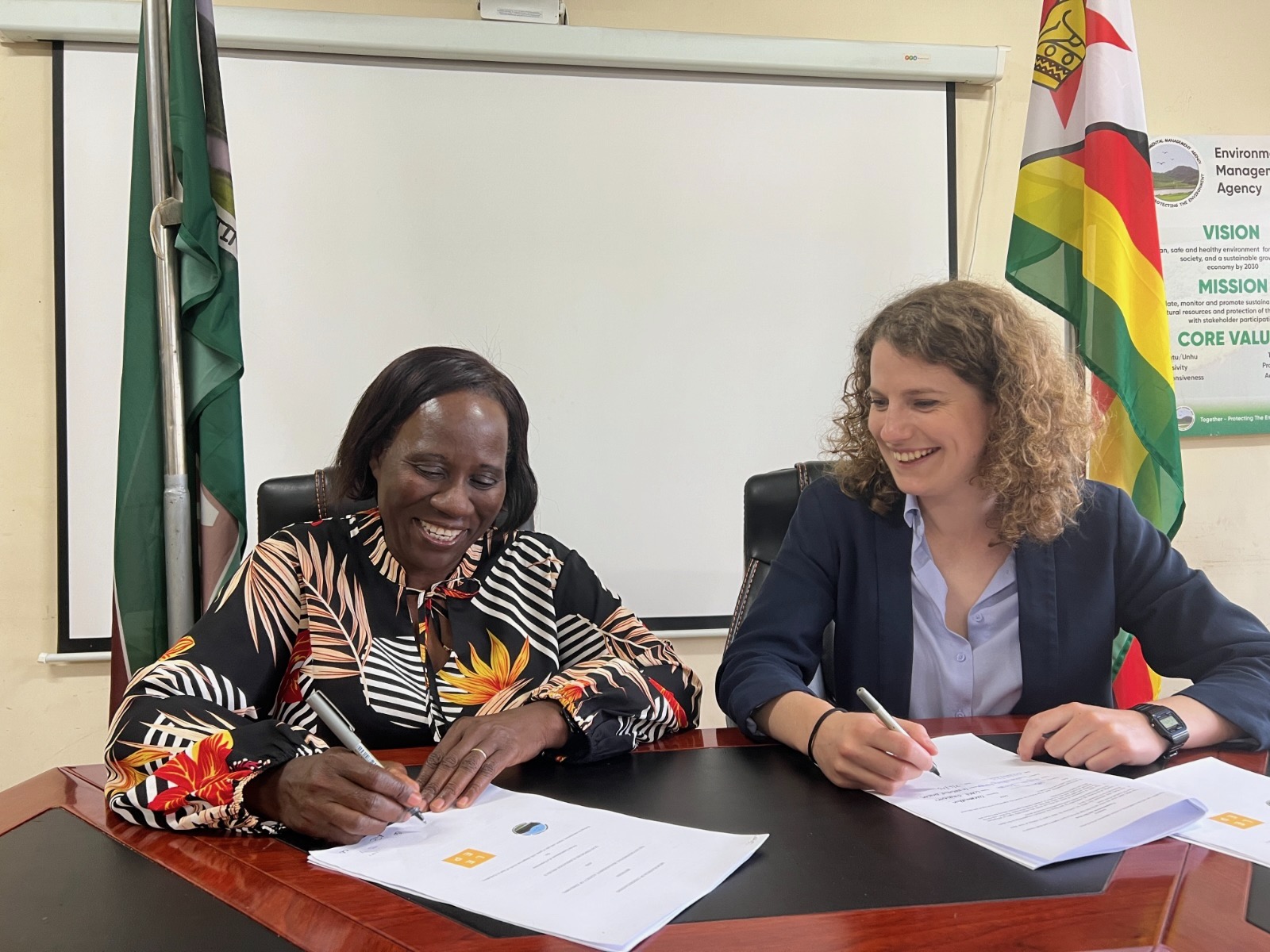
LEEP Executive Director Clare Donaldson signs an MOU to work with the Government of Zimbabwe in 2023.
Lead paint is a multifaceted issue; it’s related to public health, the environment, trade, even education. But that means no one naturally “owns” the problem — in governments, and in the development sector.
When you help governments address lead paint, what does that look like? Are you meeting with people? Sharing written materials?
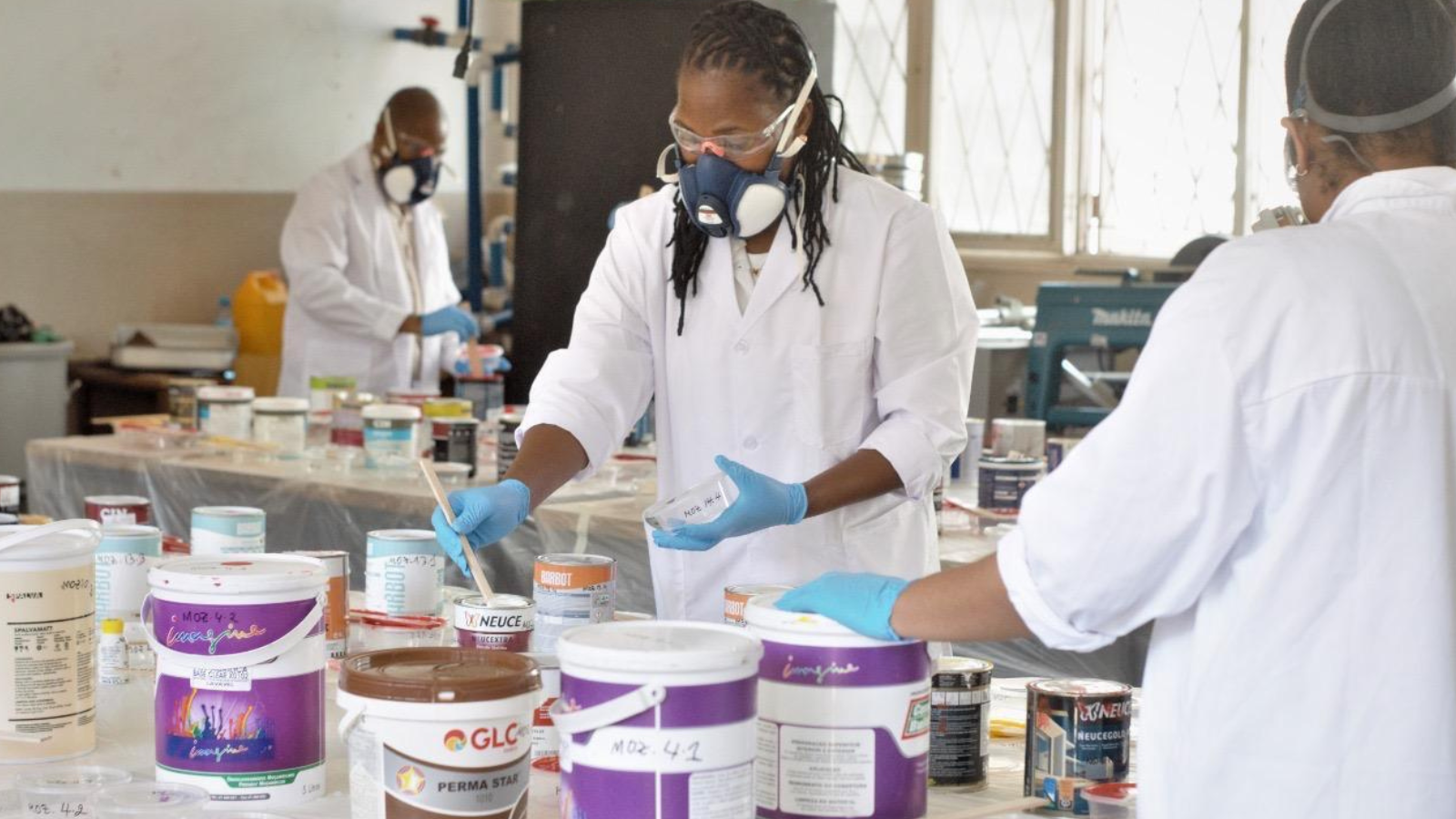
We start by generating data — working with a government agency to conduct a market survey and test which paint brands contain lead. Local contextual data helps us get buy-in across the government for both regulation and enforcement, and it also helps us know which manufacturers we should contact about reformulating their paint.
Next, we offer technical assistance. We share resources, like models of how other countries regulate lead paint; we also host workshops to bring people from different agencies together, so they can figure out the roles they’ll play to enforce regulations and build testing capacity. On the testing side, we also offer training and help with acquiring and setting up equipment.
Are there any cases where this strategy hasn’t worked out, and there’s been a barrier to making progress? Or has it been smooth sailing as long as you get the government’s attention?
There are cases where progress has been slower than we’d like — governments don’t always see this as their top priority. But for the most part, they do see it as important and are open to working on it. In a small number of cases, particularly in countries with larger and more powerful manufacturers, there is some pushback from industry.
Clare conducting a paint study in partnership with Liberia’s Environmental Protection Agency in 2021.
Do you have any favorite memories from your time at LEEP?
I’ve enjoyed traveling to different countries and meeting government employees who really want to do a good job and make things better for people in their country.
If I had to pick a single trip, it would be doing a paint study in Sierra Leone. Paint studies are an odd experience; you’re driving around from shop to shop and trying to buy every single brand you can find. You spend the whole day fiddling around with paint, literally watching it dry. But the whole team at the Sierra Leone Environmental Protection Agency were just so friendly and committed and solution-oriented that I thoroughly enjoyed the experience. I’ll remember that trip for a long time.
What are your biggest wins from the last year?
In 2025, we supported five new countries that introduced regulation: Sierra Leone, Liberia, Burundi, Niger, and Peru.
In 19 other countries we support, we’ve gotten to the point where manufacturers representing over half the market are switching from lead to alternative ingredients. In Malawi, the first place we worked, the numbers keep dropping — from 89% of manufacturers using lead in 2021, to about 10% now. We’re really delighted to see them getting so close to being lead-free. Meanwhile, our recent study revealed that Pakistan has cut in half the share of lead paint on the market since we began work there. We estimate that this reduction in lead paint will protect more than 7.5 million children from exposure to lead paint in their homes.
Another story: We found that many countries had a particular spray paint for sale from the UAE. So we engaged that manufacturer — literally turning up at their door — and their leadership said they’d reformulate. Quite recently, we tested their paint and saw that it was lead-free. It’s hard to know how much credit we should take for a change like that, but I think it’s likely we played a part. I’m really pleased by this, because they export to a huge number of countries.
In 2025, LEEP conducted paint studies in 11 countries to determine whether and to what extent lead-based paints are available on the market.
Are you working on anything new this year?
The big thing is that we’re expanding beyond paint to other sources of lead exposure. Our vision is to address other sources the same way, by working with both government and industry.
Two of the most promising sources right now are spices and traditional eyeliners. Both are similar to paint in certain ways. They are probably less widespread, and more concentrated in particular countries, but if you’re in one of those countries, you are at risk for really severe harm.
We’re also looking into plastic dishware like mugs or bowls, which we know contain lead in some places. We’re still trying to understand how leachable this is: if you drink out of that mug, how much lead actually comes out?
On paint, we’re trying to find more cases like the UAE one — taking a more global view of the industry and engaging the biggest players around the world, not just going country by country.
Finally, this year we’ll continue to expand our paint programs to 50 countries across Africa, while also advancing programs in Latin America and Asia.
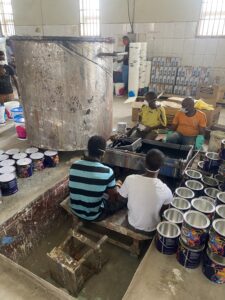
A paint factory in Sierra Leone. LEEP provides free support to manufacturers to help them switch to lead-free ingredients.
I was just about to ask what you’d do if you ran out of lead paint to address! I guess it helps that “Lead Exposure Elimination Project” isn’t too specific.
I like that “Project” implies a time-bound thing, where we aren’t working on this forever.
We don’t want to claim that we’re definitely going to get rid of all lead paint around the world — some small informal manufacturers will be hard to reach. But I think we could see an 80% reduction within the next eight years or so. I think we’ll keep finding impactful work after that, but if not, we should shut down.
What advice would you give to someone starting a nonprofit in global health?
That makes me think back to my time in the Charity Entrepreneurship program. The program really emphasized listening to beneficiaries over donors, and maximizing impact even when it’s inconvenient — don’t take funding you don’t need, and shut down if you’re not impactful. Those are hard things to do as a leader, but important. You’re a charity for the people you help, not yourself.