
Skip to Content
March 9, 2026

How Banning Toxic Pesticides Could Prevent Over 100,000 Deaths per Year

Aaron Gertler

By Aaron Gertler

Content warning: This article contains extensive discussion of suicide. If you have questions on self-harm or feel suicidal, you can find an international helpline at www.findahelpline.com.

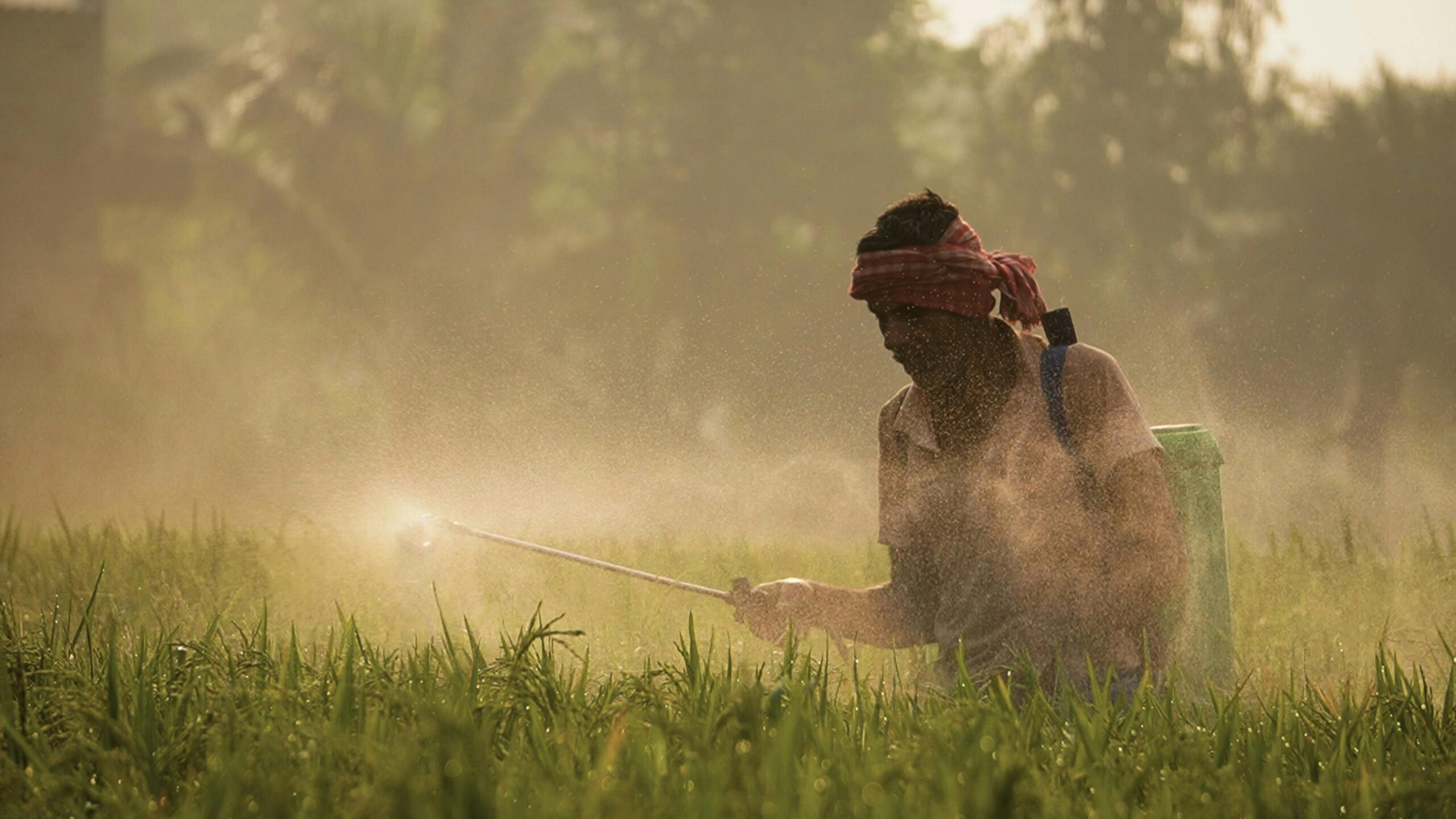
Mark Davis’s first job in agriculture involved standing in cotton fields on an Israeli kibbutz, waving a flag to show crop dusters where to spray pesticides. “I’d regularly be coated with organophosphates, become quite ill, then get up the next day and go back to work,” he recalls.

More than five decades later, Davis is working to ban some of those same chemicals — not just for worker safety, but to prevent the estimated 130,000 deaths that occur each year when people deliberately ingest toxic pesticides. This method accounts for 15-20% of all global suicides, mostly in low- and middle-income countries.

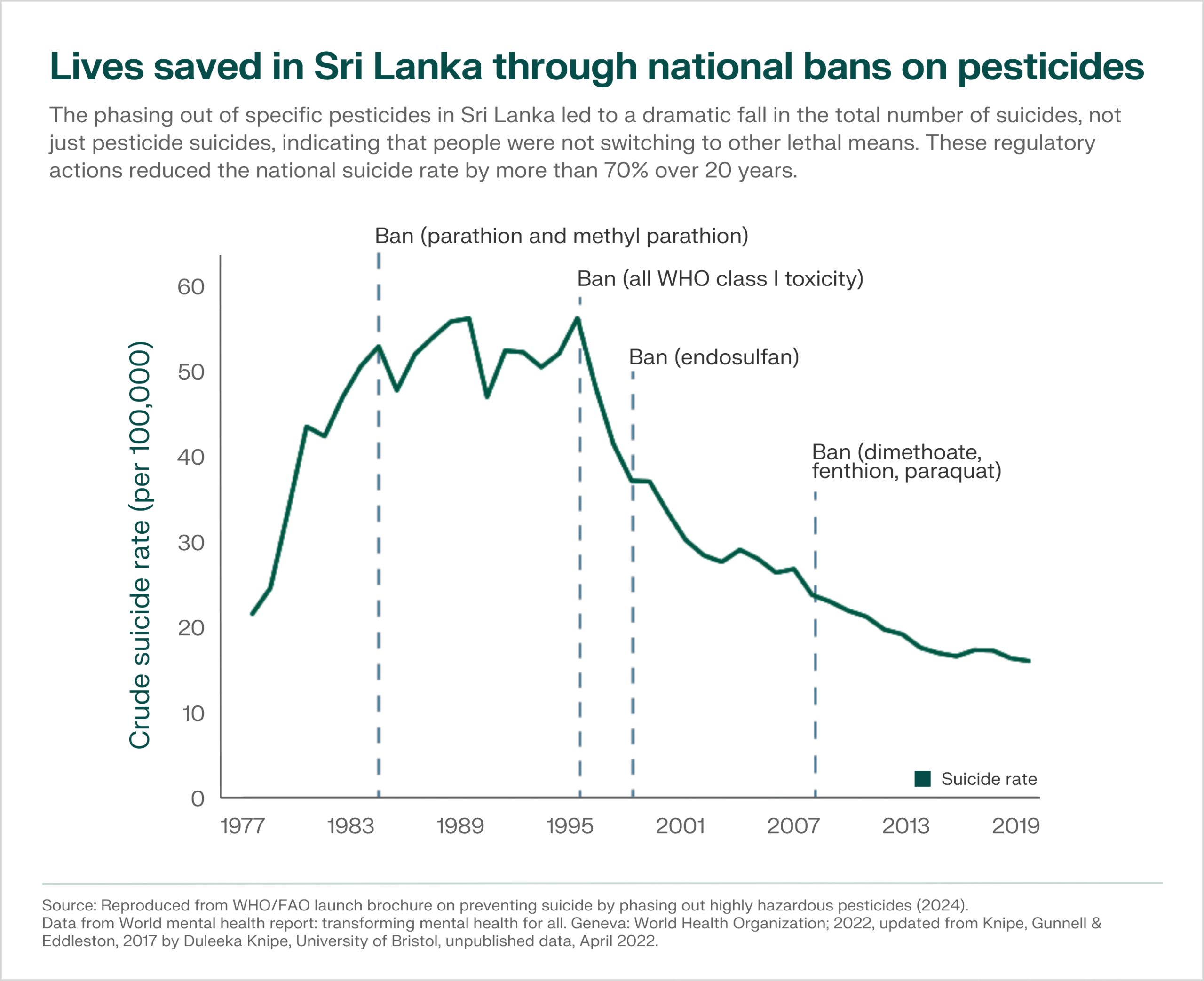
Most pesticides aren’t lethal to humans when consumed in small amounts, but a few varieties, like certain organophosphate pesticides, herbicides, and fumigants, are especially toxic and account for the vast majority of suicide deaths. As with firearm suicides, access to particularly lethal means makes suicide attempts more likely to be fatal. Banning those products can be highly effective; after Sri Lanka outlawed a handful of the most lethal pesticides in the 1980s and 90s, the country’s suicide rate fell by 70% through 2017. 

The Centre for Pesticide Suicide Prevention (CPSP), based at the University of Edinburgh, works to replicate this progress worldwide by encouraging governments to ban the most lethal pesticides, while supporting farmers to protect their crops through alternative methods. Coefficient Giving funded CPSP’s launch in 2017, and has given over $20 million in total to support its work.

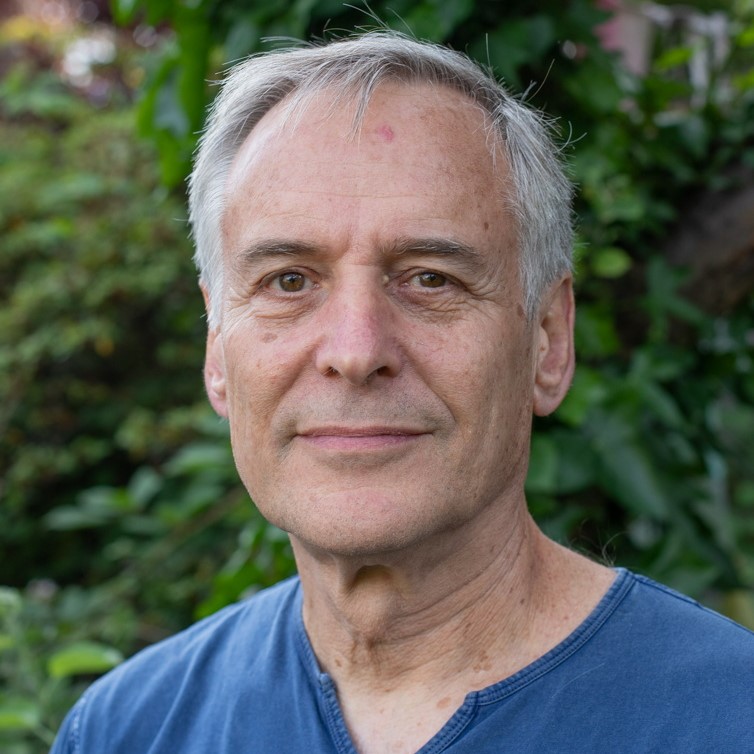
Davis, CPSP’s Director for Agriculture and Regulatory Outreach, has been a driving force behind this success. He’s been working on pesticide-related issues for nearly four decades, including 17 years at the United Nations Food and Agriculture Organization to help set standards for pesticide regulation and use. 

We spoke with Davis about his journey from the kibbutz to working on global pesticide reform, his approach to balancing farmers’ livelihoods with suicide prevention, and why he remains optimistic about progress.

(This interview has been edited for style and clarity.) 

You’ve spent 38 years working on pesticide issues — an impressively focused career. What led you there?

“Focused” is an interesting way of putting it! I see it as a series of fortunate accidents.

My first subject in university was engineering, but I didn’t particularly like it. I used to hang out with sociology and art students who were much cooler than the engineers, and they would talk about environmental issues. Those conversations inspired me to study ecology — even though I didn’t have the first idea what ecology was.

It turned out to be the study of how organisms and environments are interconnected. I found this endlessly fascinating, especially the ecology of pest control in agriculture, because I had grown up in agricultural environments. I’d used — and abused — pesticides as a teenager.


You grew up on a farm?

My parents were members of a kibbutz in Israel. I worked in the cotton fields and scouted for pests. If we found too many in one place, I’d stand there and wave a flag to show the crop dusters where to spray pesticides. I’d regularly be coated with organophosphates, become quite ill, then get up the next day and go back to work.

So having started from that perspective, I was now learning that pesticides weren’t a sustainable solution to agricultural problems. We were turning to science for answers when we needed to be looking at nature instead.


You started working on pesticides out of concern for the environment. But at CPSP, you focus on the human cost of pesticides being too readily available. Did you take the job partly because you wanted to help people more directly?

The real answer is that working for the U.N. means having a fixed retirement age. When you turn 62, they wave goodbye and show you the door.

At 62, of course, we still have lots of energy and are not quite ready to put our slippers on and our feet up on the sofa. And I knew Michael Eddleston [CPSP’s director] from my work at the UN — including in Sri Lanka, where we developed the model we’d use later with CPSP. I had long been interested in pushing the boundaries of how people understand sustainable crop management. How do we feed a growing population while addressing issues like climate change and resource limitations? How can we intensify production in a way that will be sustainable for the next 100 years?

And that’s exactly what I work on at CPSP now. While Michael and other staff handle the medical side of things, I focus on crop production and agricultural policy. When we open a dialogue with regulators and agricultural officials, I tell them: “You can do things without relying so heavily on these toxic chemicals. You will make your agriculture both more sustainable and safer for the people working on farms. The food in local markets and destined for export will be free of toxic residues. The environment will be cleaner and biodiversity will improve. And on top of all that, you’ll also save lives that are being lost through self-harm because those chemicals are present in agricultural communities.”
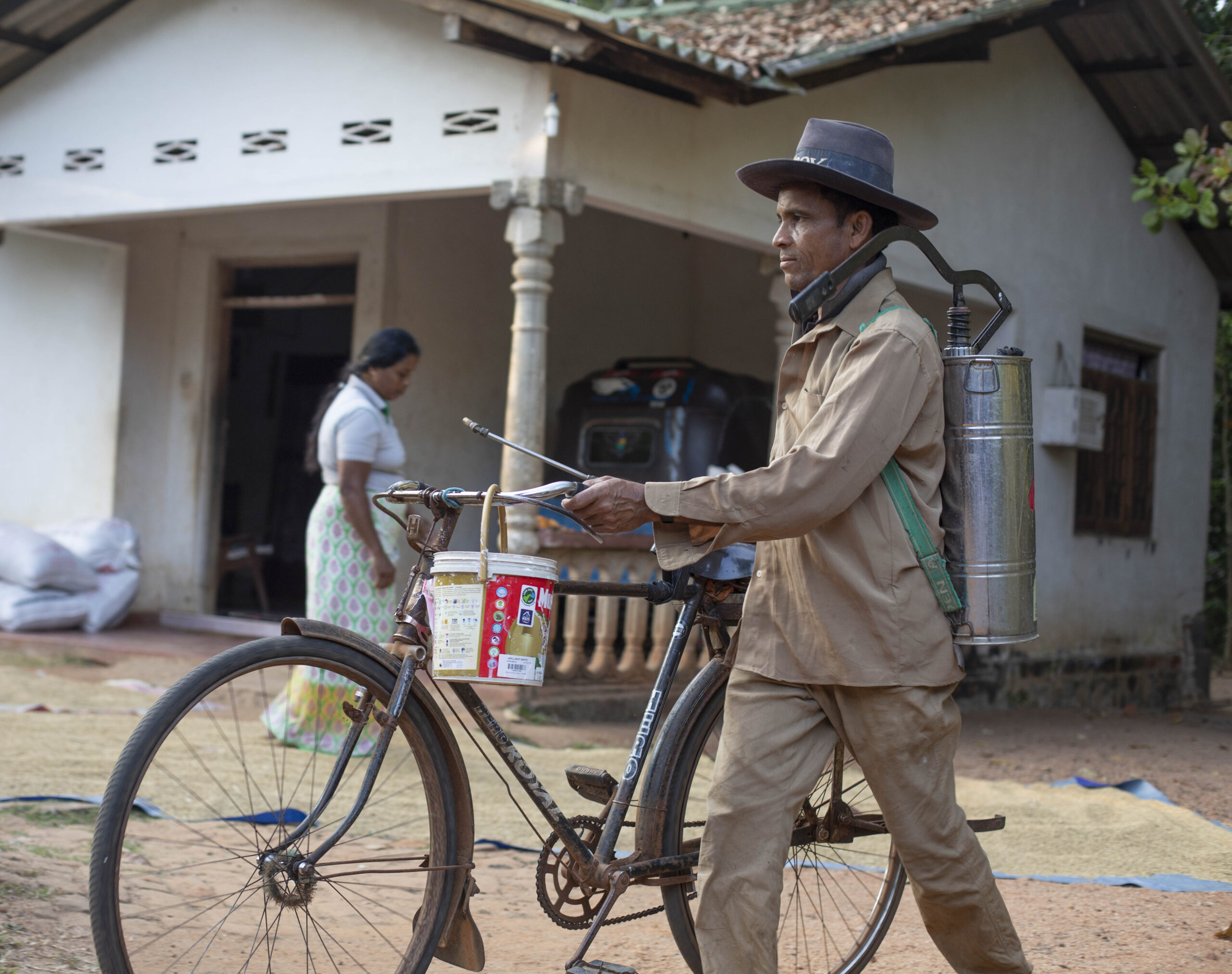
I’d stand there and wave a flag to show the crop dusters where to spray pesticides. I’d regularly be coated with organophosphates, become quite ill, then get up the next day and go back to work.

It’s easy to think that good advocacy means getting people to do what you want, even if they don’t like it. But it sounds like your approach is to present multiple options and offer to compromise.

The people at the root of everything we do are farmers — many of whom are struggling to survive. It’s hard to produce food, especially the cheap food supermarkets demand, and still make a profit at the end of the year. Your production system is subject to huge variability.

We don’t just want to be setting constraints on the way farmers work. So we also need to help them find alternative ways to manage pests. In many cases, if you stop using certain insecticides, you will see things come in from nature that help to suppress your pests; just let the ecosystem do its work! But there’s no money in that approach. There is money in selling chemicals, so that’s what gets promoted. Which makes things difficult.


How does CPSP relate to pesticide manufacturers? 

The manufacturers show up pretty much wherever we go, to defend their products and their markets. We’re open to conversations.

There is, in some respects, an understanding that things are changing. Many of the most toxic products are being phased out as a result of international action, and because of heightened awareness among regulators, the food industry, and even farmers. Companies won’t work very hard to defend those chemicals. However, they will staunchly defend the continued use of some chemicals, including some very toxic ones, and they continue to promote the important role chemicals play in agricultural production.

I’ve never said we should ban all pesticides, and neither have the groups I worked with. Instead, I think we can manage with significantly smaller quantities by targeting our applications more effectively. 


What’s it like to start working in a new country? Where do you begin?

Our work in Sri Lanka gave us the model we adapt for each new country. First, you try to establish the scale of the problem: are people dying from pesticide exposure, intentional or otherwise? We go to hospitals and forensic laboratories and morgues and try to find out. And once we see that it’s happening, we try to identify which chemicals are responsible. 

We usually come away with a short list of chemicals we know are responsible for most deaths, since only a handful of pesticides are routinely lethal to consume. Once we have our list, we open up a conversation between the country’s health and agricultural authorities, who generally don’t talk to each other. 

Michael Eddleston and the other health experts on our team work with local practitioners to interpret the toxicology, the medical statistics, and connections to local public health and mental health efforts. Our local teams, working with their pesticide regulators and crop protection specialists, focus on further exploring how and where the problem chemicals are being used, and finding viable and cost-effective alternatives to put in place.

You can do things without relying so heavily on these toxic chemicals. You will make your agriculture both more sustainable and safer for the people working on farms.

What are some examples of alternatives to pesticides?

Sometimes, there is a cultural or ecological method or a biocontrol agent that will work for a particular combination of crop and pest.

But it could mean many other things, too. This is where the private sector comes in; we’ll talk to importers and local vendors of chemicals and agricultural products and see what they could provide to replace the most toxic chemicals. Businesses play an important role in the process, both by providing products and training farmers on how to use them — and they’re often very open to dialogue, because they see that this is the future. 

I also think we’ll see a rise in precision technologies using robots, drones, and satellite-guided machines. This may seem futuristic for low-income countries, but in the same way that some places adopted cell phones before telephone wires could reach them, these new technologies could leapfrog conventional tractors and sprayers. They can identify and target pests precisely and use non-chemical controls or very small amounts of chemicals. 

Once we start trying alternatives, we monitor progress: are we seeing fewer deaths from the relevant substance? Are farmers happy with the results of the new method?

Right now, one of the many countries we’re working in is Suriname, a country with a very small population and a very high suicide rate. We know exactly what’s being used for those suicides, and we’re working with regulators to address the issue. And as we’ve been doing this, I’ve been recalling similar conversations I had in Guyana, the country right next door to Suriname, 15 years ago. At the time, I was with the U.N., and I wasn’t able to make any progress. On the other hand, when CPSP moves in with a well-thought-out model and good examples of how it can work, we are less constrained than U.N. agencies, and we are in a position to help bring about changes fast and flexibly.


What about securing pesticides better, rather than banning them? Have countries tried requiring locked storage for pesticides? 

It was tried in Sri Lanka, which made a massive investment in storage boxes buried in the ground away from people’s homes. The boxes were locked and the keys were kept elsewhere. And it failed, because it was inconvenient and the farmers stopped using the storage units.  

We work very closely with the WHO’s mental health unit. Their guidance says that if you want to reduce suicides, you identify the most common means and take steps to prevent access. Sometimes, this works pretty well, like barriers to stop people from jumping off bridges. But it didn’t work with the storage units.

The more effective approach is to completely remove access to the means. If the most lethal pesticides aren’t available, the number of people dying will go down; it’s as simple as that. Even if distressed people consume a different chemical, they will not die, and that makes a world of difference to the victim, their family, and the community.

The more effective approach is to completely remove access to the means. If the most lethal pesticides aren’t available, the number of people dying will go down; it’s as simple as that.

How optimistic are you about continued progress? Do you think we might see a world in the next 5-10 years where these deaths have dropped by a factor of ten?

I do think it’s possible; I am eternally optimistic.

We are at a pivot point in terms of international governance that filters down to national governance. There are meaningful calls to prohibit, restrict, and reduce the use of Highly Hazardous Pesticides in the Global Framework on Chemicals, the Rotterdam Convention, the Stockholm Convention, and the Convention on Biological Diversity. All of these frameworks call for reductions in the risks that pesticides present to people and to the environment — whether by restricting usage or through other technical measures, like increasing the use of protective equipment. So I do believe we can get rid of the most toxic pesticides and continue farming effectively. 

But there will always be more work to do. When Rachel Carson wrote Silent Spring in the 1960s, she talked about DDT and organochlorines. Those aren’t in use now, but instead we have organophosphates, carbamates, pyrethroids, and neonicotinoids. As our understanding of science evolves, there’s always something around the corner that we realize we shouldn’t be using. The tragedy is that once these chemicals are in the environment, it is often virtually impossible to remove them.

I’ve thought many times that it would be wonderful to work myself out of a job. Unfortunately, that hasn’t happened yet, and I suspect it isn’t going to happen in the near future. But we know what works and we know how many more lives can be saved. That’s progress well worth fighting for.